Sep 29, 2026
How to Choose a Fuel Water Separator for Diesel Engines
Water in diesel damages injection systems. Check these five things before buying a fuel water separator for your diesel engine or generator set.
A fuel water separator is a filtration stage that separates undissolved water from diesel and collects it for removal before the fuel reaches sensitive injection components. Many assemblies also capture solid particles, but a particle rating alone does not describe their ability to separate water.
Water can enter diesel during transport, storage, or operation. If it reaches a modern injection system, it can reduce lubrication, cause corrosion, and damage expensive components. A standby generator may sit for months before anyone discovers a fuel problem.
When choosing a fuel water separator, check five things: its filtration rating, fuel flow and connections, filter design, water collection and drain, and water separation performance. You also need to consider how the engine will be used.
Why Water Separation Matters
Water may be present as free water, which forms larger droplets and can collect in a tank or filter bowl, or as emulsified water, made up of fine droplets dispersed through the fuel. Emulsified water is harder to remove by settling alone. Biodiesel blends can make these emulsions more stable. Effective filter media helps separate fine droplets so they can be collected and drained.
If water repeatedly appears in the separator, investigate the tank and fuel supply. Replacing the filter without addressing the source may leave the engine exposed.
Primary vs Secondary Fuel Filters
In many diesel systems, the primary fuel filter/water separator removes water and larger particles before the transfer pump. A secondary fuel filter provides finer particle filtration before fuel reaches the injection system. The engine manufacturer’s layout and specifications determine which filter belongs in each position.
Some separators have a collection bowl, drain valve, or water-in-fuel sensor. The sensor provides a warning; collected water still needs to be drained.
Five Checks Before Choosing a Diesel Fuel Water Separator
1. Micron rating
First identify whether you need a primary separator or a secondary final filter. Primary filters commonly have a coarser rating than secondary filters, but the correct rating depends on the engine. A 30 micron primary filter should not automatically be treated as the only protection for a common-rail system. Likewise, a 2 micron fuel filter is not automatically suitable for the primary position.
Ask whether the stated rating is nominal or absolute and what efficiency it represents. Two filters with the same printed micron number may perform differently.
2. Fuel flow and connections
Confirm the maximum required flow through the filter, allowable restriction, operating pressure, port or thread size, and mounting space. Engine fuel consumption alone may not equal the flow at the filter’s position.
A filter with adequate rated flow can still be unsuitable if its connections or pressure rating do not match the installed assembly.
3. Spin-on or cartridge design
A spin-on fuel filter water separator is typically changed as a canister; some designs retain a reusable collection bowl. A cartridge system uses a replaceable element inside an existing housing.
Follow the installed housing design. Check threads, gaskets, bowl connections, seals, and service clearance before ordering. Similar-looking filters should not be assumed interchangeable.
4. Water capacity and drain access
Find out where water collects and whether the drain is easy to reach after installation. Check whether the equipment requires a water-in-fuel sensor connection.
Drain access matters especially for standby generator sets. A filter that cannot be inspected and drained conveniently is unlikely to receive consistent maintenance.
5. Water separation performance
A micron rating measures particle filtration, not water separation efficiency. Request performance data for the proposed filter, including the test method and conditions.
ISO 16332:2018, Diesel engines — Fuel filters — Method for evaluating fuel/water separation efficiency, describes a laboratory comparison test for diesel fuel/water separators, covering fine-droplet (emulsified water) and coarse-droplet (free water) test conditions. A statement that a filter was “tested to ISO 16332” is incomplete without its actual result and tested configuration.
Example Fuel Filter Cross-References
Buyers often begin with the number printed on an installed element. The table below shows examples listed together in Baldwin’s DAVCO Replacement Filters Guide. It is a sourcing reference, not confirmation that every listed filter fits every engine or housing.
Fleetguard Cross Reference | Baldwin Cross Reference | Donaldson Cross Reference | DAVCO assembly |
FS19765 | PF7930 | P550851 | Fuel Pro 382 / Plus |
FS19763 | PF7928 | P550849 | Fuel Pro 382 / Plus |
FS19728 | PF7782 | P550736 | Fuel Pro 382 / Standard |
FS19624 | PF7748 | P550467 | Fuel Pro 382 / Standard |
FS19915 | PF9804 | P550854 | Fuel Pro 482 / 483 |
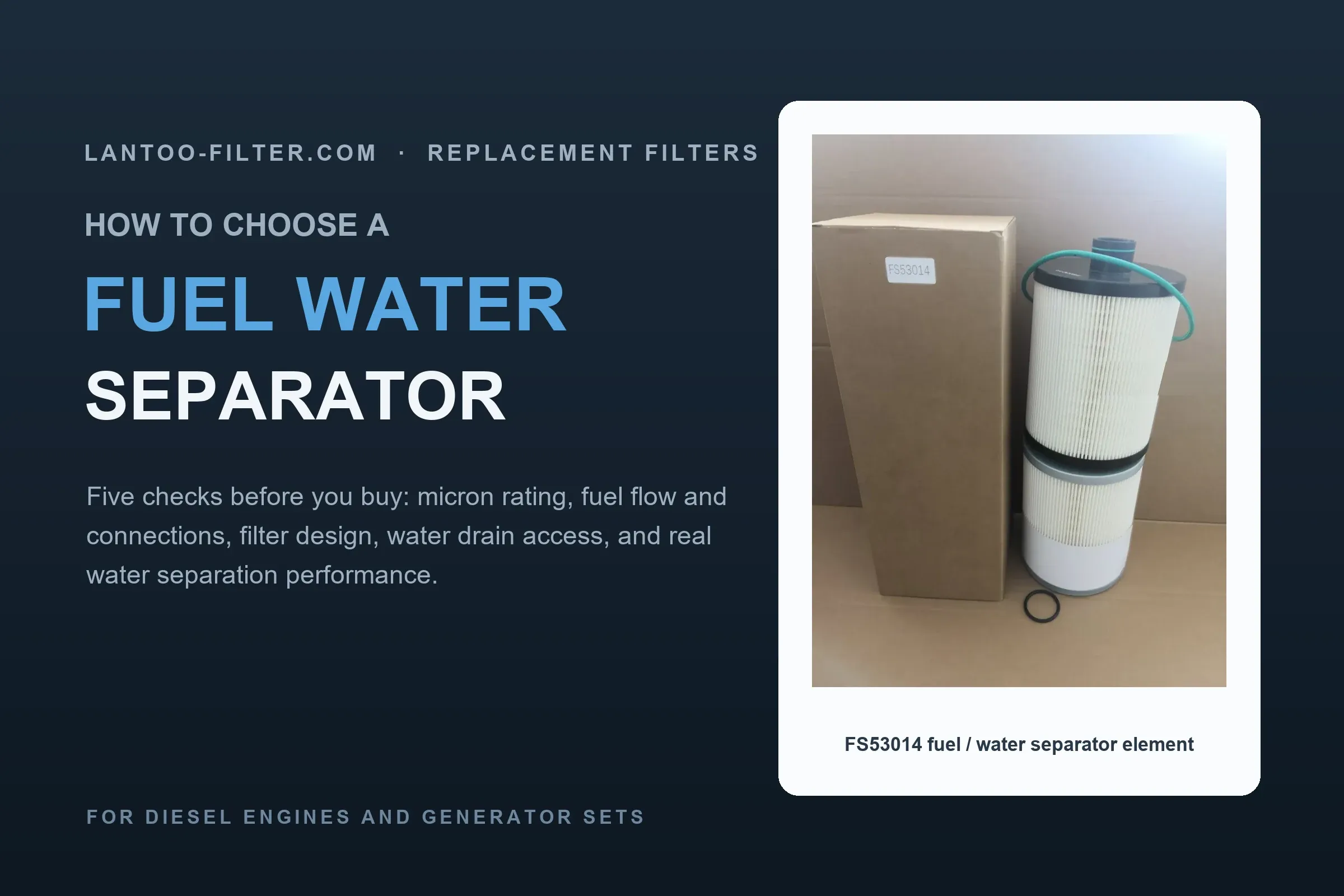
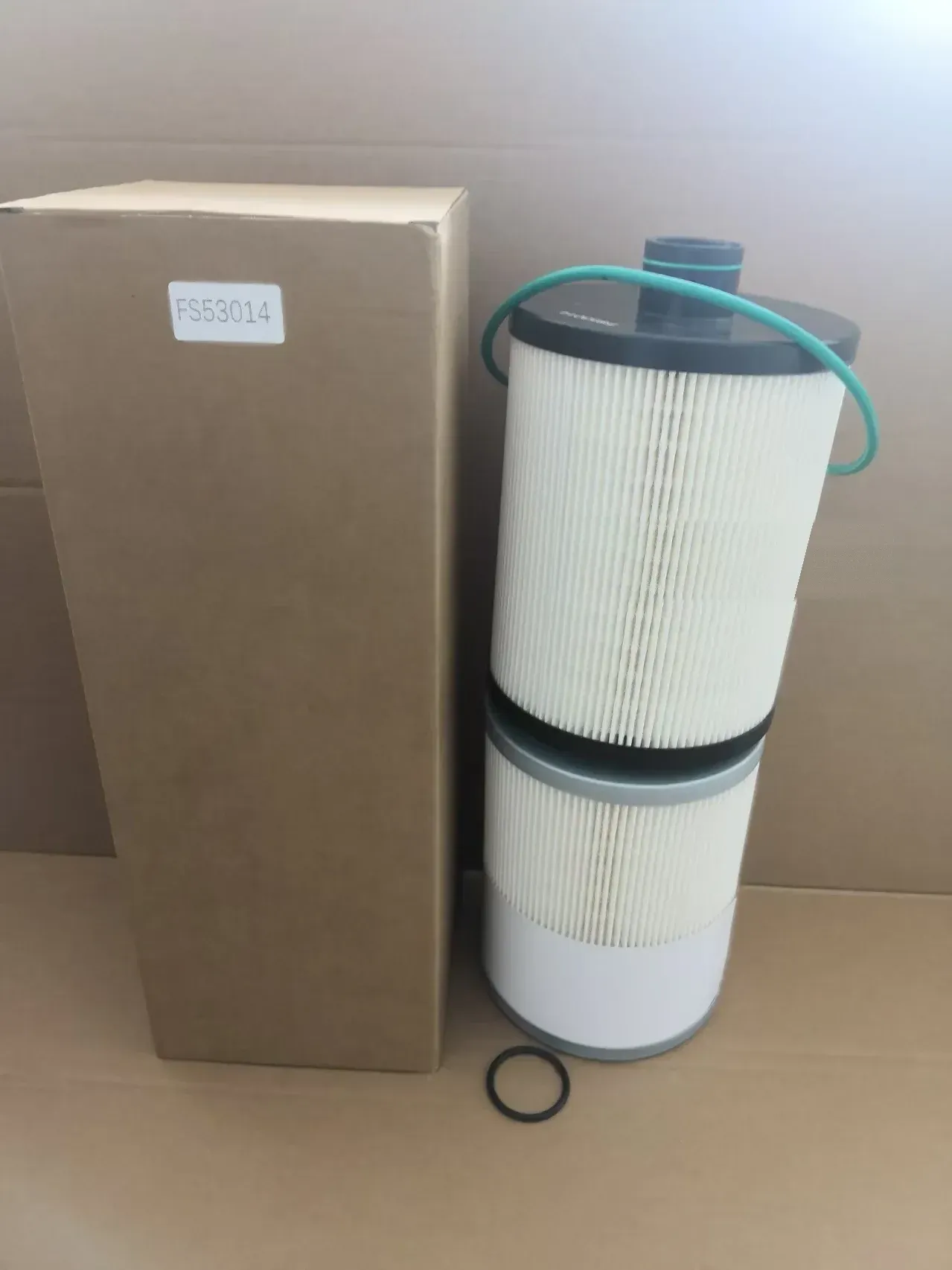
Check the exact DAVCO assembly, engine application, dimensions, seals, flow, and performance before approving a replacement. For example, FS19765 appears in more than one application listing in the guide. The part number alone does not identify your vehicle’s complete fuel-system configuration. A live example of a checked FS replacement is our FS53014 fuel water separator listing.
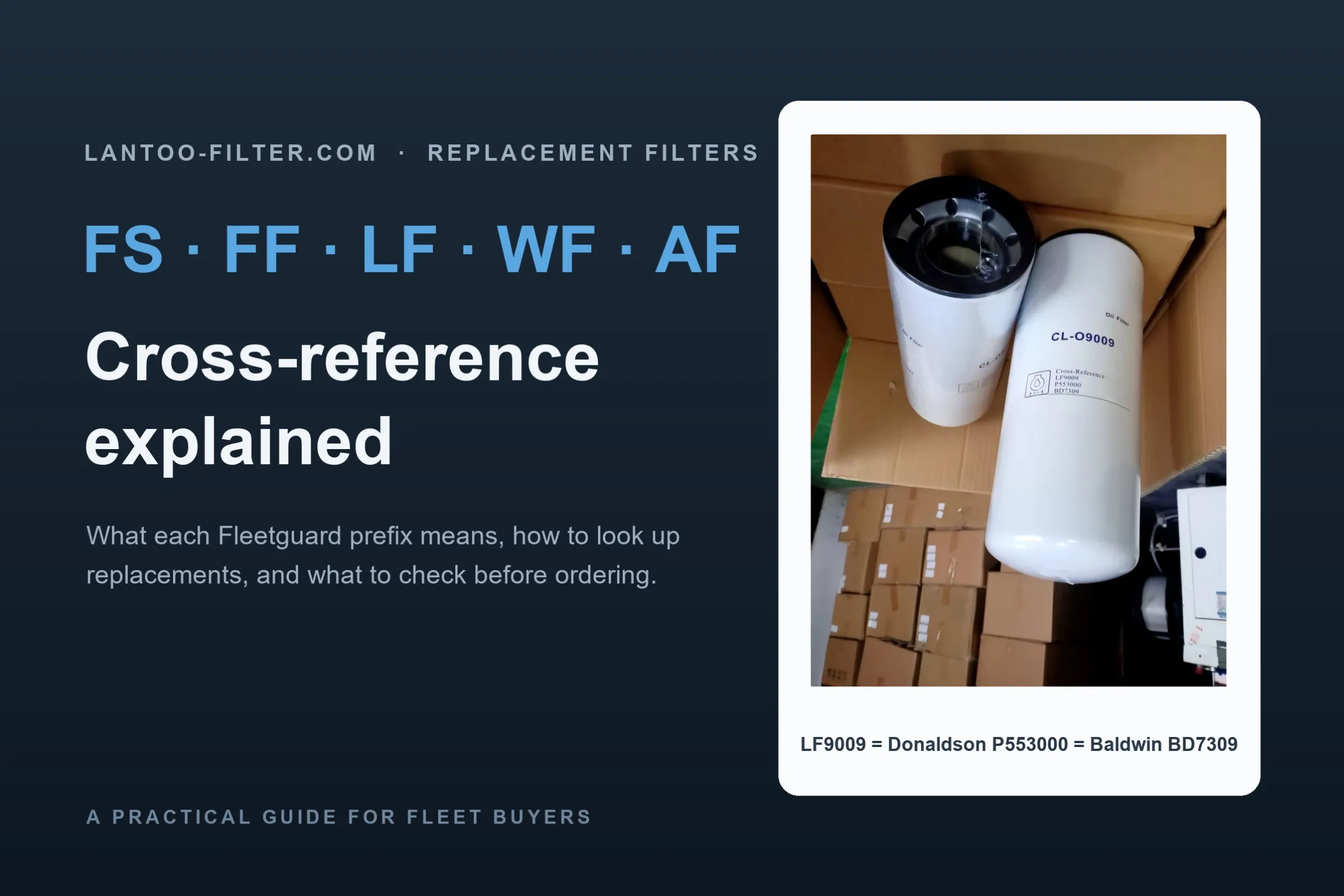
The examples above are only a sample of the guide. For how to read references between Fleetguard, Donaldson, Baldwin and other brands, see our Fleetguard cross reference guide.
Generator Set vs Vehicle: What Changes?
A diesel generator fuel filter must meet the engine’s flow and filtration requirements, but its maintenance routine also matters. Fuel in a standby set may remain stored for long periods. Before a scheduled test or restart after extended standby, follow the site’s procedure to:
1. Check the tank and fuel supply for signs of water.
2. Inspect and drain the separator when required.
3. Check any water-in-fuel warning.
4. Look for leaks after draining or replacing the element.
5. Review the filter service record.
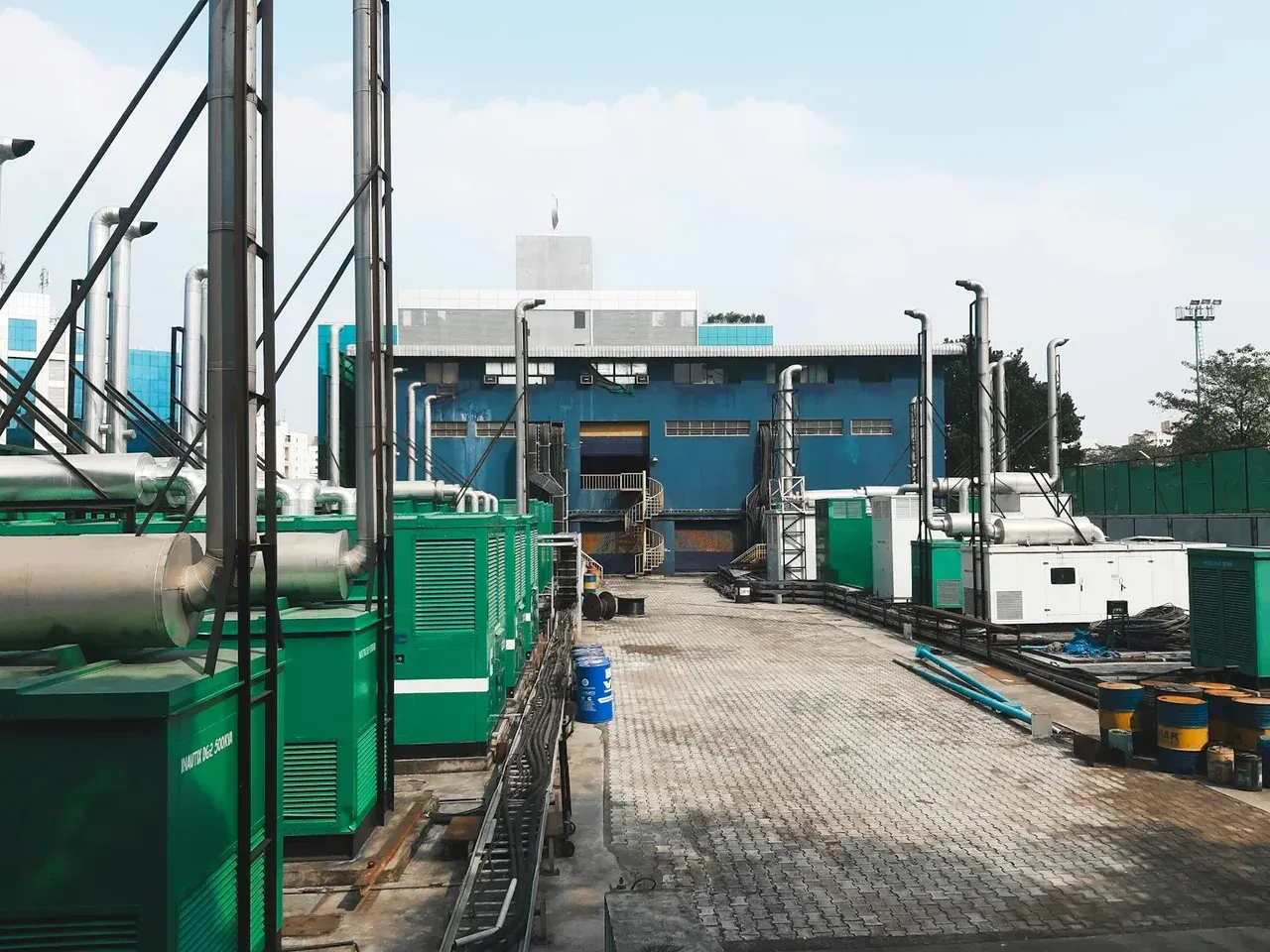
In a Cummins QSK60 generator set project in Indonesia, the customer faced a long lead time for original filters. We sourced an aftermarket option for that application and arranged faster delivery. Identifying a suitable replacement before an urgent maintenance need gives buyers more time to verify it.
For a vehicle, also check mounting security, vibration exposure, clearance, and whether the drain is protected but accessible. Browse our filter range and send us the current number for an application check.
Installation and Maintenance
Install the assembly in the orientation required by its manufacturer. Keep the drain accessible, and use the prescribed priming and leak-check procedure after service.
Follow the engine and filter makers’ instructions for draining and element replacement. Water checks and element changes are separate tasks. Fuel quality, storage, and operating conditions may require closer inspection than the standard schedule.
Can I clean and reuse the element?
Replace a disposable element unless its manufacturer explicitly approves a cleaning procedure. Draining the bowl does not restore a worn or contaminated element.
Frequently Asked Questions
How often should a fuel water separator be changed?
Follow the equipment’s replacement interval and any restriction, warning, or contamination criteria. There is no reliable single interval for every diesel engine.
Can it remove emulsified water?
Some suitable filter media can separate fine water droplets, but performance varies. Ask for test results for the proposed product rather than relying on its micron rating.
Do I need both primary and secondary filters?
Use the arrangement specified by the engine manufacturer. In many modern systems, the primary stage manages water while the secondary stage provides finer protection for injection components.
Need a Replacement?
Send us your engine or generator set model, or the number on your current filter, through our contact page. We can start with that information and request housing photos or specifications if needed. For more guidance on part numbers, read our Fleetguard cross reference guide.
Fleetguard, Baldwin, Donaldson and DAVCO part numbers on this page are used solely for identification, compatibility research and cross-reference purposes. They are trademarks of their respective owners. Lantoo-Filter is an independent aftermarket supplier and is not presented as an authorized distributor of these brands; no affiliation or endorsement is implied. Replacement suitability must be confirmed for the specific engine and application before ordering.