Sep 23, 2026
How Do You Cross-Reference Fleetguard FS, FF, LF, WF and AF Filters?
What Fleetguard FS, FF, LF, WF and AF part numbers mean, how to run a cross reference, and what to verify before ordering aftermarket replacements.
A Fleetguard cross reference matches a Fleetguard FS, FF, LF, WF or AF part number to an equivalent filter from another brand. The fastest free lookup is the official fleetguard.com tool, but any result should be verified against the engine application and key specifications before ordering — dimensions alone do not guarantee a match.
Most filter replacement inquiries begin with a part number. It may be printed on an old filter, found in a maintenance record or taken from the equipment manual. Entering that number into a cross-reference tool usually surfaces one or more aftermarket replacement options — and that is where this guide begins.
Cross-reference results are a starting point, not a final confirmation. Two filters may share similar dimensions and appear in the same results, yet differ in filtration efficiency, flow rate, water-separation performance, bypass-valve settings or coolant additive content. This guide explains what Fleetguard FS, LF, WF and AF part numbers generally represent, how to look up replacements, and what to verify before placing an order.
Why Do Buyers Seek Aftermarket Replacements?
Buyers do not turn to aftermarket filters because genuine filters have quality problems. In many cases the genuine filter is unavailable locally, has a long lead time, or is no longer economical for older equipment or a fleet with high annual filter consumption. Some original models have been discontinued even though the truck, generator or machine is still running.
There is also a structural reason, and it is becoming more visible. In late 2025, Fleetguard — now part of Atmus Filtration Technologies — announced an exclusive aftermarket partnership with Love’s Travel Stops in the United States: a concrete example of original brands consolidating how and where genuine parts are sold. For buyers operating outside such networks — particularly in Africa, the Middle East, Southeast Asia and South America — genuine supply is becoming more centralized, and in practical terms slower or more expensive to reach. That does not make genuine filters worse; it makes verified aftermarket alternatives more relevant to more of the market each year.
The purpose of a replacement filter is not to imitate the original manufacturer’s packaging or trademark. It is to provide a filter suitable for the application and operating conditions, with the required performance at a more practical cost and delivery time. For a new product or supplier, we recommend starting with samples or a trial order before moving to regular-volume purchasing.
What Do Fleetguard FS, FF, LF, WF and AF Part Numbers Stand For?
Fleetguard is the filtration brand originally established by Cummins and now part of Atmus Filtration Technologies. Its numbering system is used across trucks, generator sets and construction equipment worldwide, and the prefix tells you the filter category at a glance:
FS — Fuel/water separator. Removes particles and separates water from diesel fuel.
FF — Fuel filter. Provides the fine filtration stage of diesel fuel; in most fuel systems it works together with the FS separator.
LF — Lube oil filter. Removes contaminants from engine lubricating oil.
WF — Coolant filter. Filters coolant; some models also release coolant additives.
AF — Air filter. Removes dust and other particles from engine intake air.
These prefixes help you organize an inquiry, but the prefix alone does not confirm the correct replacement. Here is what to check for each type.
FS: Fuel/Water Separators
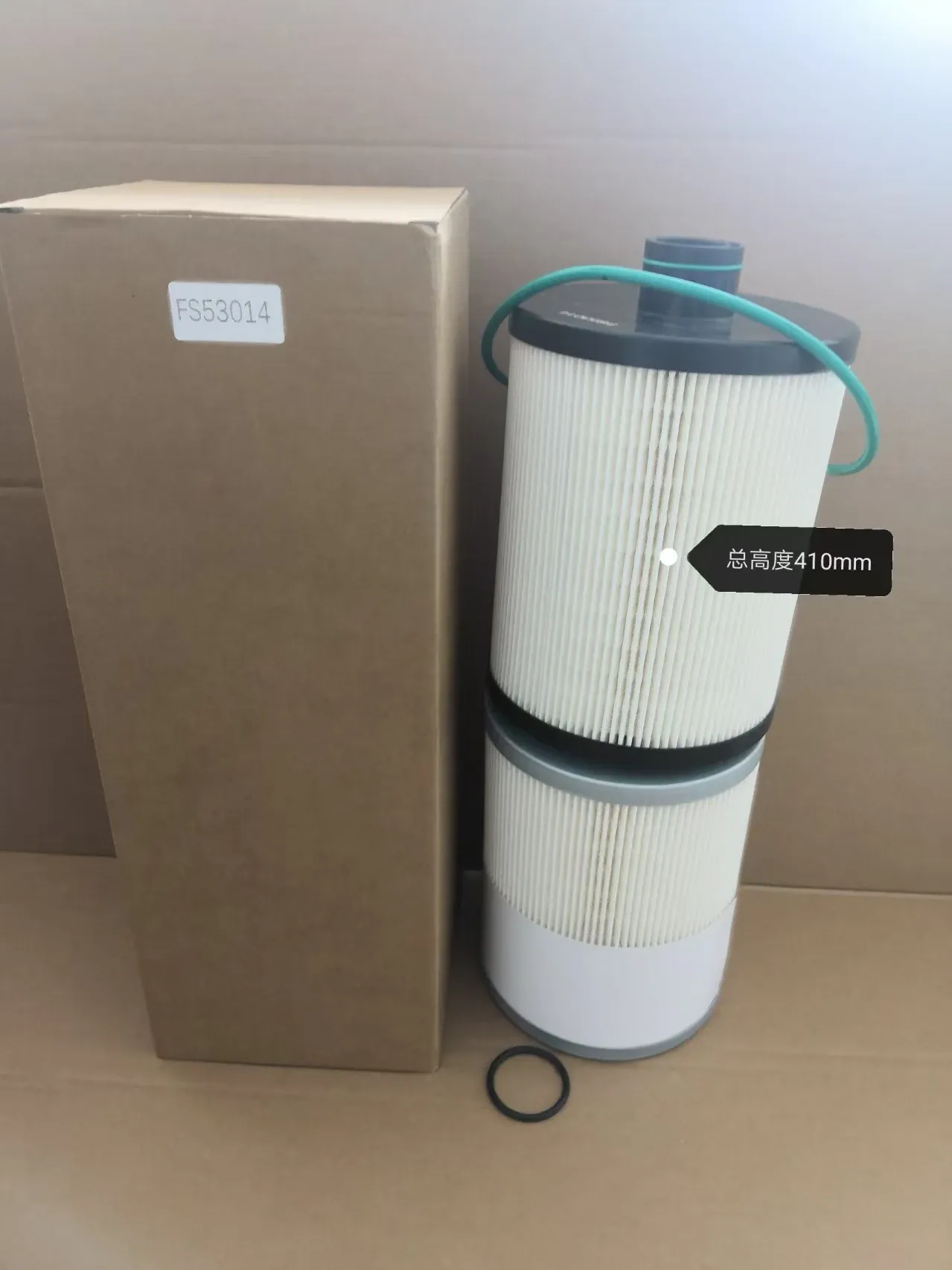
FS filters remove particles and water from diesel fuel before it reaches the fuel pump and injectors. When checking an aftermarket FS replacement, compare thread and seal dimensions, physical dimensions, filtration efficiency, rated flow, water-separation performance, and burst or collapse resistance. Drain valves, sensors, heaters and collection bowls may also need to match the original system. A live example of a checked FS replacement is our FS53014 fuel water separator listing.
FF: Fuel Filters
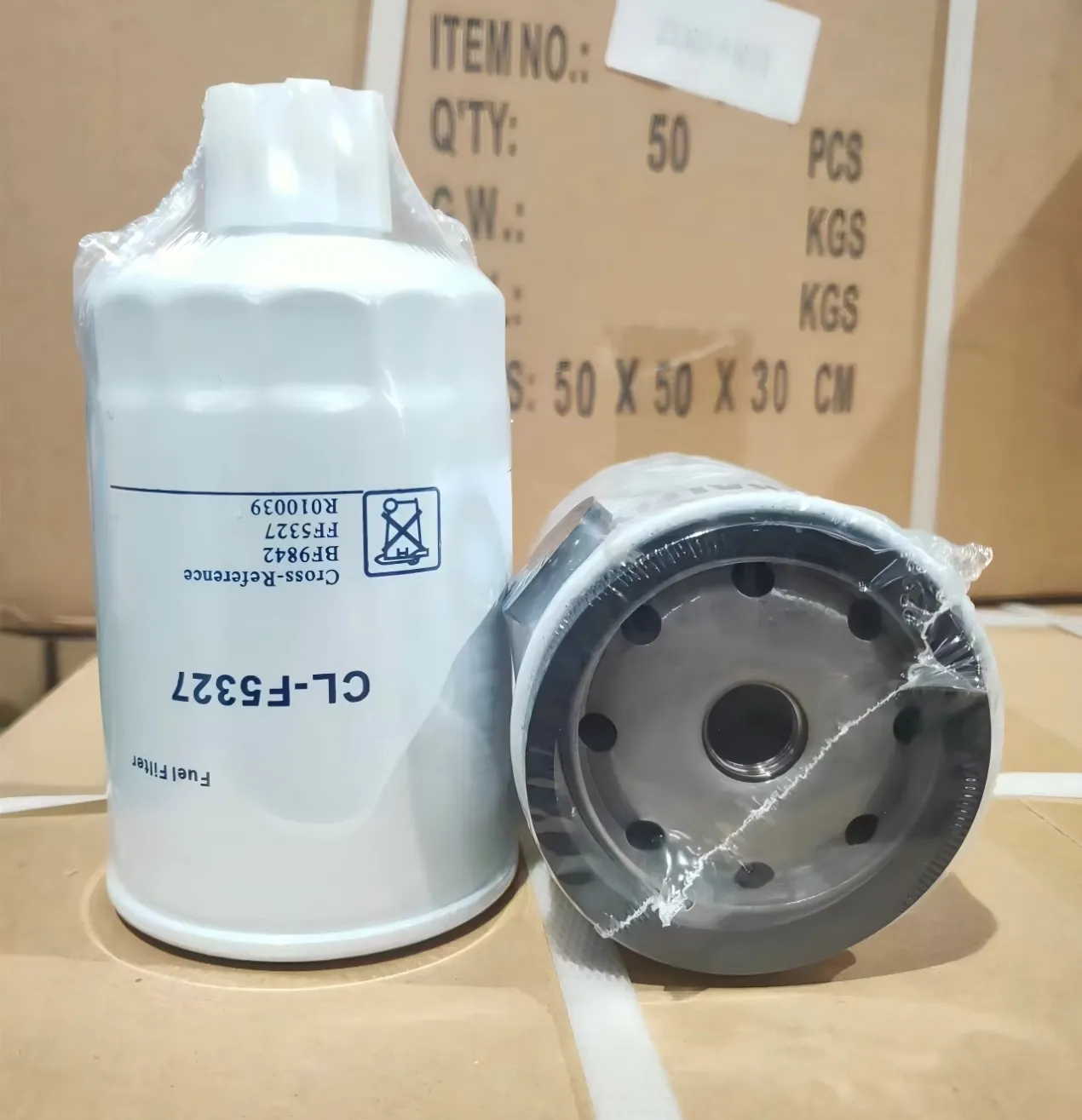
FF filters provide the fine fuel-filtration stage and are usually installed together with an FS separator: the FS removes water and larger particles, while the FF protects the pump and injectors from fine contamination. When checking an FF replacement, compare filtration efficiency, rated flow, pressure drop, gasket and thread dimensions and the overall build. If your system runs both an FS and an FF, select the two replacements as a pair — they are designed to work together.
LF: Lube Oil Filters
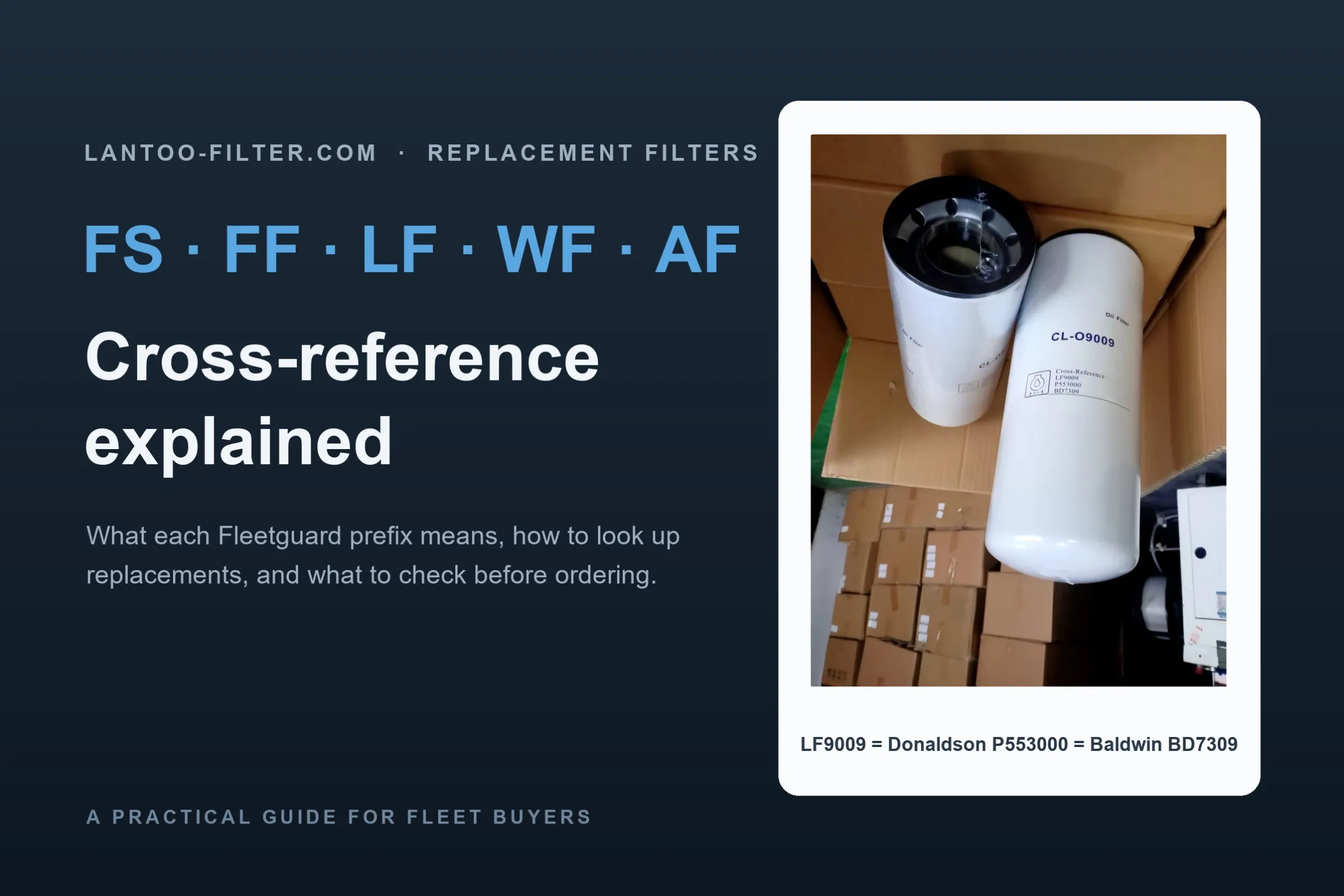
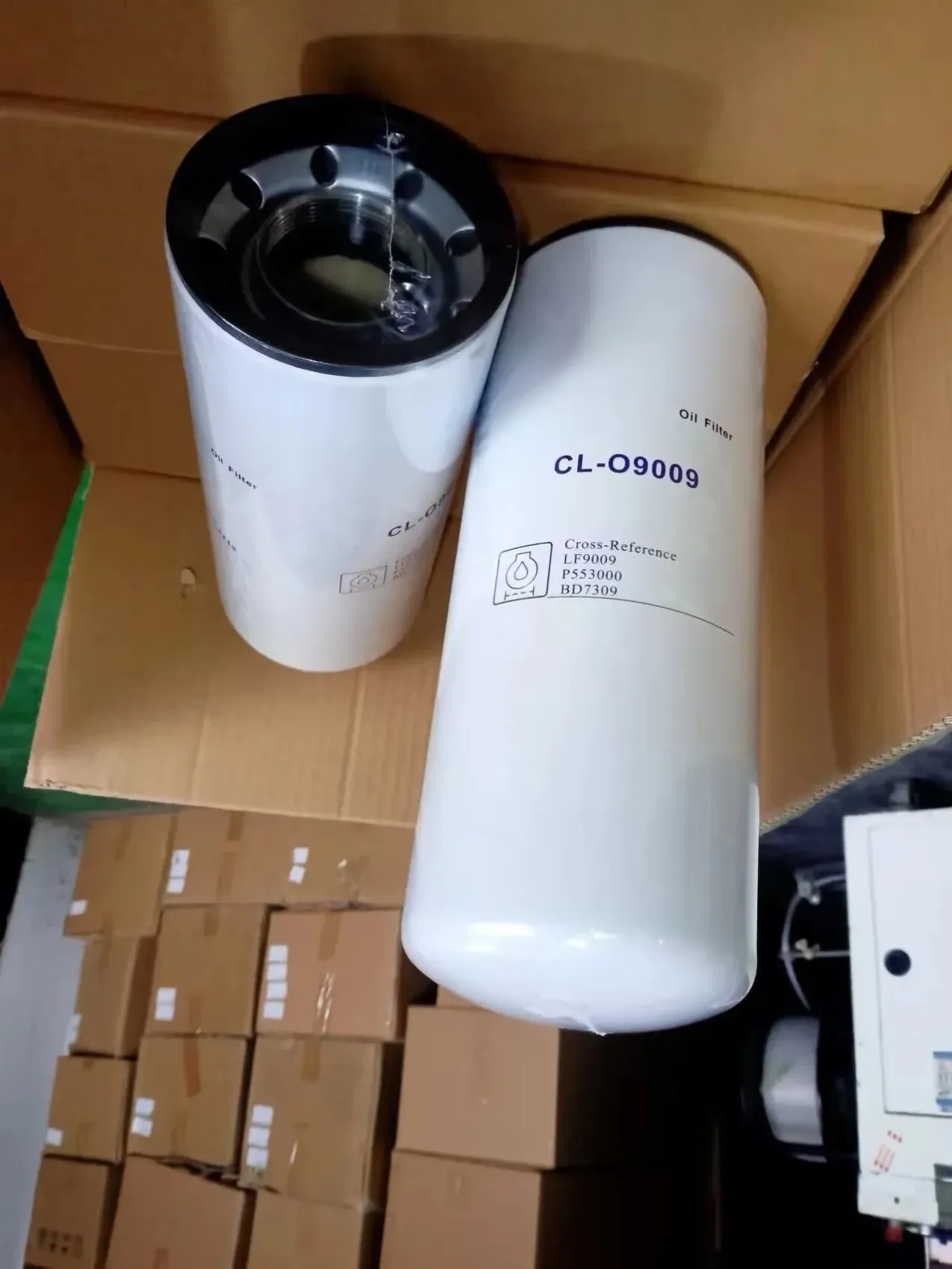
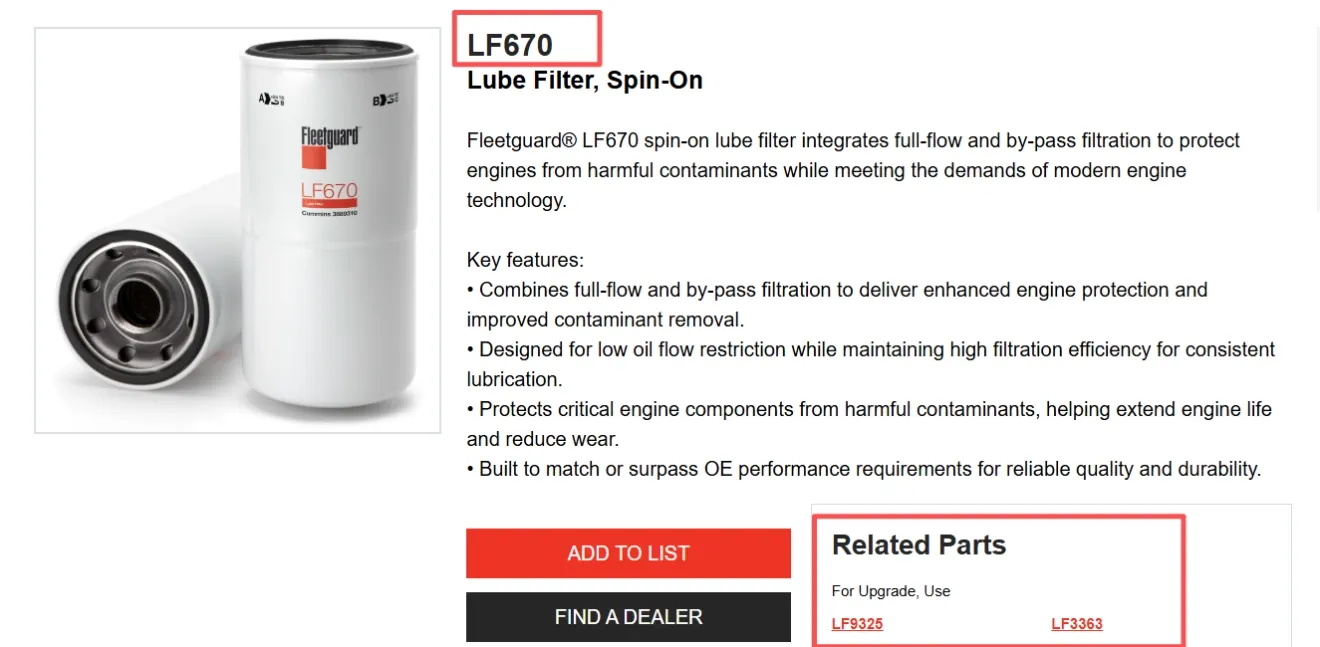
LF filters remove contaminants from engine lubricating oil; some are conventional full-flow designs, others combine full-flow and bypass filtration. A replacement should match oil flow, filtration efficiency, pressure resistance, gasket dimensions and valve configuration. For example, our LF9009 oil filter carries the cross references Fleetguard LF9009, Donaldson P553000 and Baldwin BD7309 — one part number, three brand systems, one application. A replacement that only looks similar from the outside is not specification equivalence.
WF: Coolant Filters
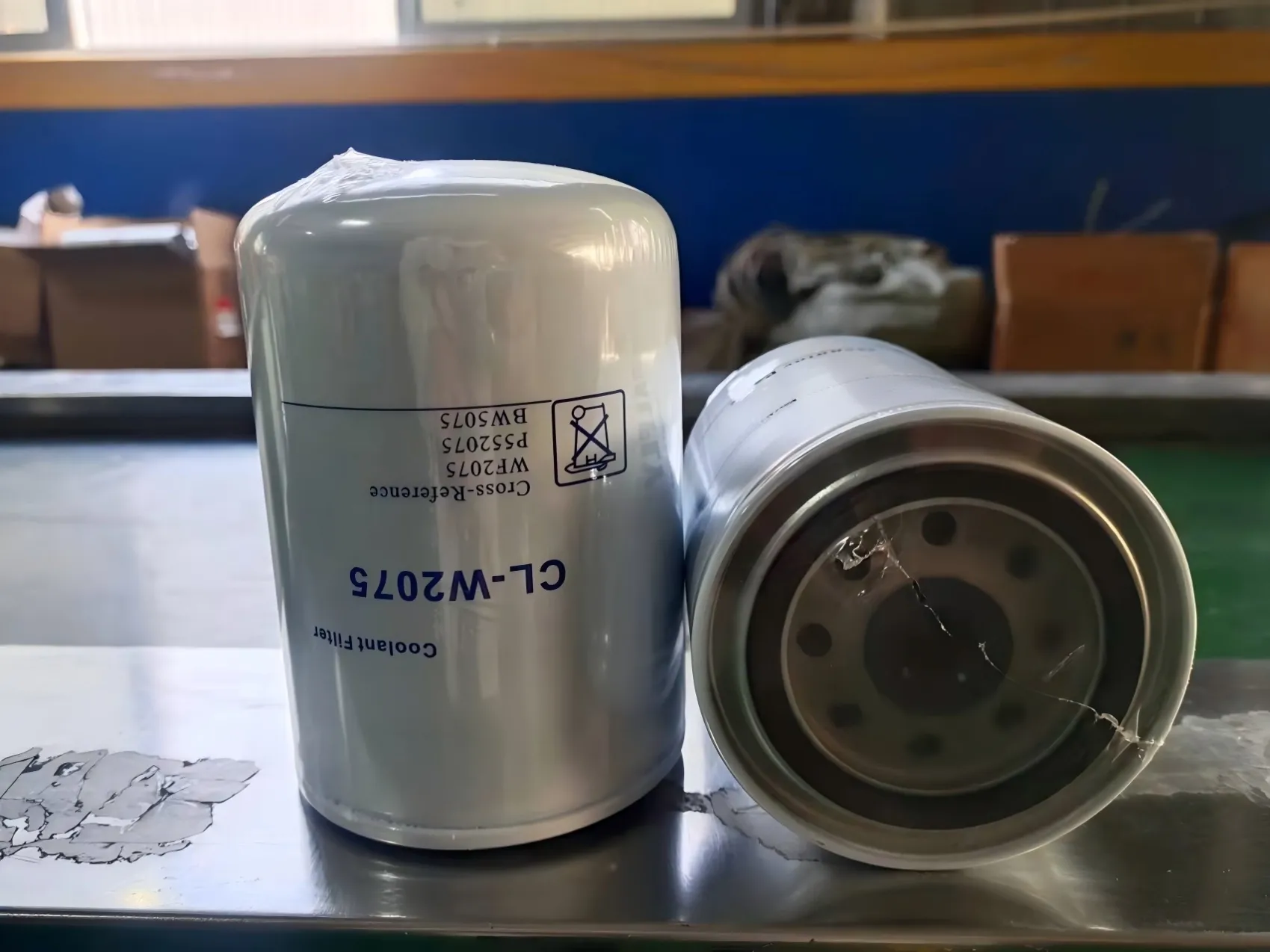
WF filters are used in engine cooling systems. Some provide filtration only; others also release Supplemental Coolant Additives such as DCA4. Confirm the coolant technology, system capacity and whether a chemical or non-chemical filter is required before ordering. Two WF filters with identical threads and dimensions can still differ in additive type and dosage — they should not be interchanged on appearance alone.
AF: Air Filters
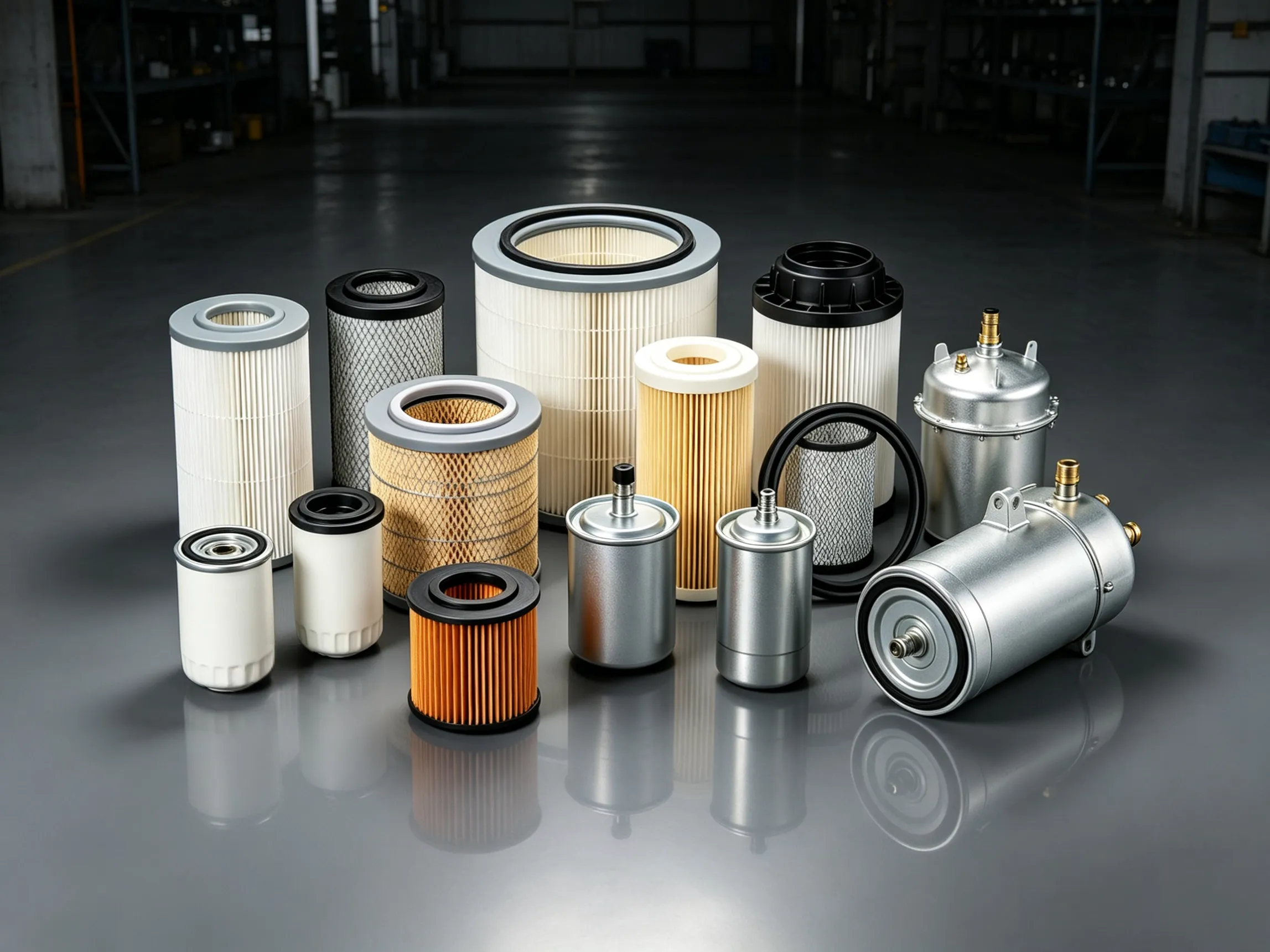
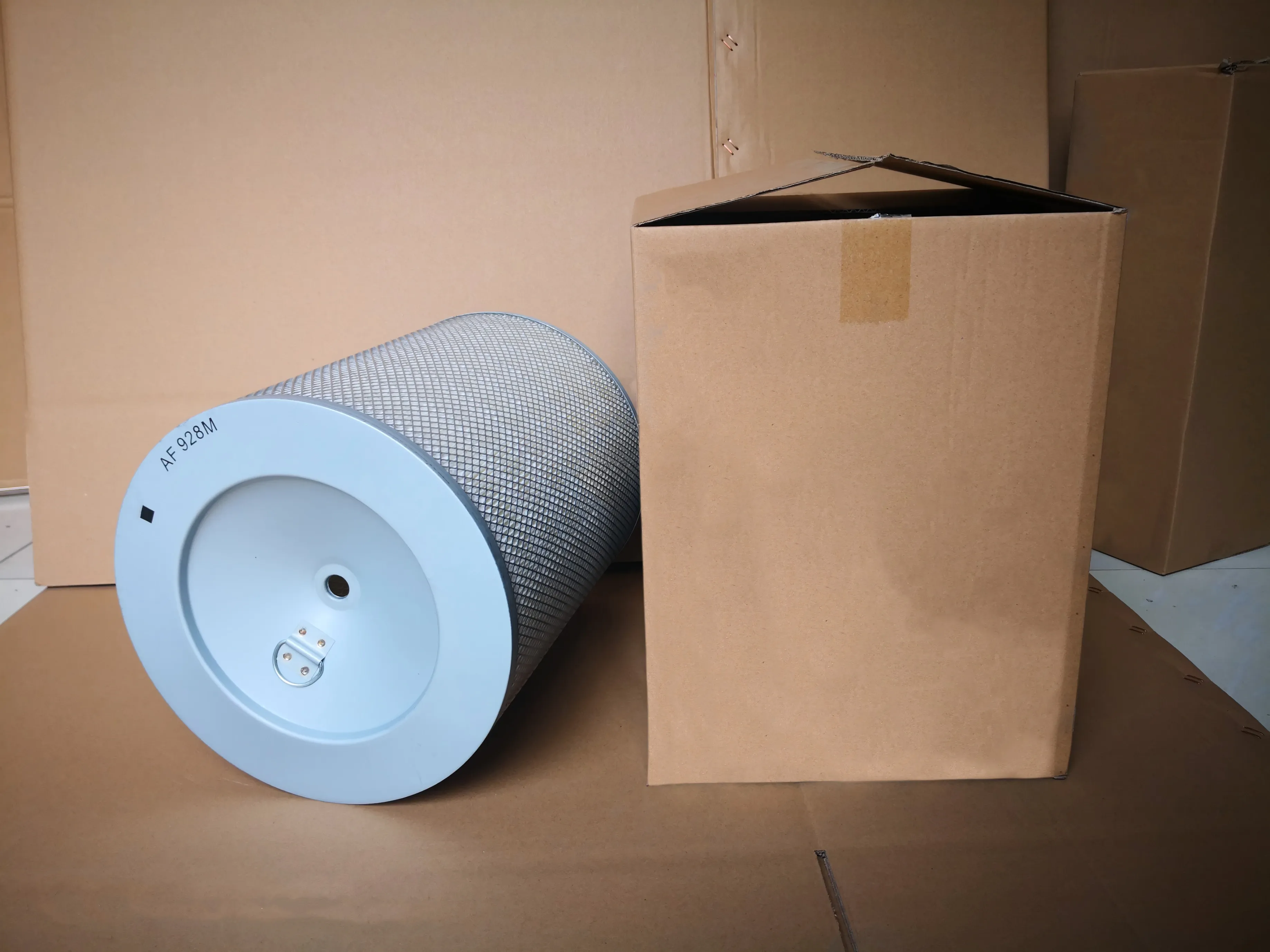
AF filters remove dust and particles from engine intake air, in cylindrical, radial-seal, panel or safety-element designs. Compare dimensions, sealing structure, airflow, filtration efficiency and dust-holding capacity. Some systems run a primary element plus an inner safety element, which perform different functions and are not interchangeable with each other.
Filter Service Life Depends on More Than Time or Mileage
A filter does not have one fixed service life. The interval in the equipment manual is the starting point; actual life is also affected by dust concentration, fuel cleanliness and water content, oil condition, engine load, operating hours, idle time, ambient temperature and humidity, equipment age and maintenance history.
An air filter on a mine or construction site loads with dust far faster than the same filter on a highway truck. A fuel/water separator needs earlier service when fuel quality is inconsistent or water keeps appearing in the tank. Oil-filter life follows engine condition, load and oil quality. Coolant-filter replacement depends on coolant type, SCA level and the engine manufacturer’s requirements.
Calendar time matters even for equipment that barely runs. A standby generator may operate only a few hours a year, but its filters, oil, coolant and stored fuel still age — maintenance schedules should consider operating hours and calendar time together.
One caution: a longer-life filter should be supported by technical information and application compatibility, not just more media or a bigger housing. And always follow the engine manufacturer’s schedule, shortened when severe operating conditions require it.
How to Check a Fleetguard Cross Reference (Free Tool)
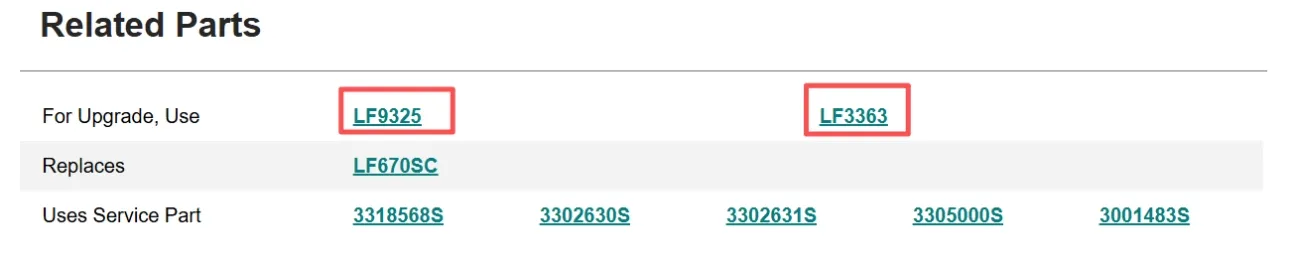
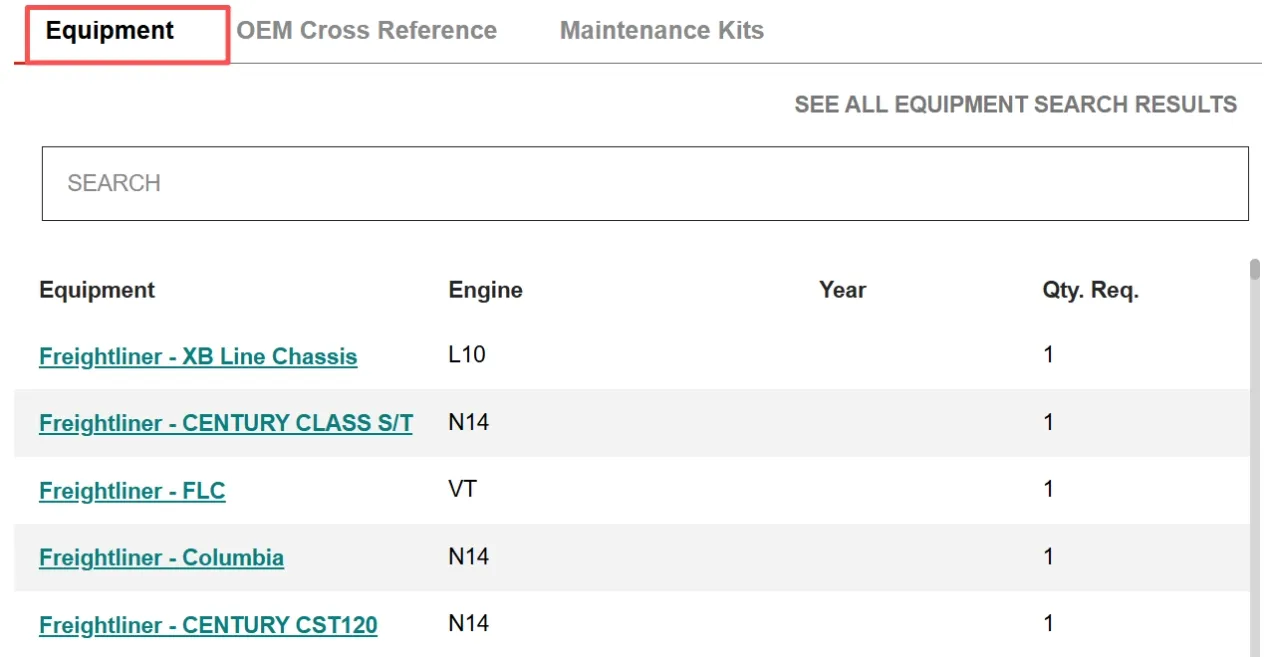
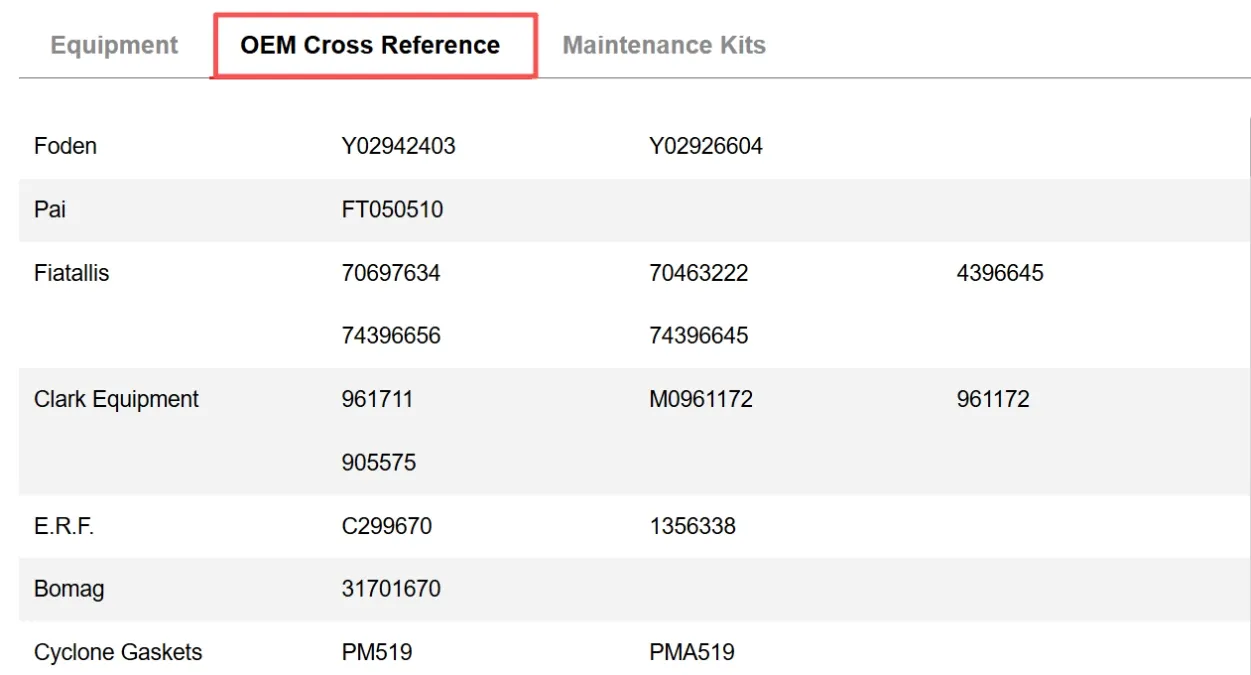
The most useful free tool is the official Fleetguard website: www.fleetguard.com. It supports four ways to search: find other brand or OEM references from a Fleetguard number; find Fleetguard products from another manufacturer’s number; search by equipment manufacturer, model and engine; and review dimensions, specifications and related parts.
Official data may not cover every regional number, old reference or aftermarket brand. Check the complete part number and its original brand first, then review the application and specifications. For uncertain cases, the engine model, equipment model, serial number or photos may still be needed. If your list is still raw, how to request a quote for replacement filters explains what to prepare so a supplier can answer in one round.
We recommend sorting every result into three categories before ordering: Confirmed replacement — the application and key specifications have been checked. Confirmation required — a likely match, but more equipment or technical information is needed. Unverified reference — the number appears in a third-party source but is not yet supported. A cross-reference result should narrow the search; it should not replace application verification.
When Is It Appropriate to Use Aftermarket Filters?
In short: when genuine filters are unavailable locally or take too long, when equipment is outside warranty, when the original model is discontinued, when the fleet consumes filters in volume, or when a buyer wants to consolidate several brands into one order. Warranty equipment, critical applications and unclear specifications are the cases where genuine parts or additional verification still make sense. Many professional buyers use both — genuine on new or critical machines, verified aftermarket on older units and routine maintenance. We cover the full decision in OEM vs Aftermarket Filters: When OEM Isn’t the Best Choice.
How Lantoo-Filter Handles Replacement Inquiries
Lantoo-Filter supplies independently manufactured aftermarket filters for passenger vehicles, heavy-duty trucks, construction machinery, industrial engines and generator sets. You can send us Fleetguard FS, FF, LF, WF or AF part numbers as purchasing references; we also check references from other filter and equipment brands.
Depending on the product and order requirements we can provide: aftermarket replacements, neutral packaging, private-label packaging, mixed-model orders, samples for application and quality evaluation, consolidation from selected manufacturers, and technical checking for uncommon or discontinued numbers. We do not print Fleetguard branding on aftermarket products or describe replacements as genuine Fleetguard parts; if a customer specifically requires genuine products, those are identified and quoted separately.
As original brands consolidate their dealer networks, organizing a verified aftermarket supply line early is becoming part of normal fleet planning rather than a fallback. For unclear applications we ask for engine details, equipment information, serial numbers or photos instead of treating an unverified cross-reference as an exact match.
If you already have a list of Fleetguard or other part numbers, send it to us directly. We will check the available aftermarket options, separate confirmed references from items requiring more information, and prepare a quotation based on your quantities and packaging requirements. You can browse our replacement filter range or send your filter list.
Frequently Asked Questions
What is a Fleetguard cross reference?
It is a mapping between a Fleetguard FS, FF, LF, WF or AF part number and an equivalent filter from another brand. The official fleetguard.com lookup is the fastest free source; the result should be verified against the application and key specifications before ordering.
Is Fleetguard part of Cummins?
Fleetguard was originally established by Cummins and is now part of Atmus Filtration Technologies, which continues to supply Fleetguard-branded filters worldwide.
Can every Fleetguard number be replaced by an aftermarket filter?
No. Current, common numbers usually have verified replacements; discontinued or regional numbers may require application checking or a dedicated production run. That is why we separate results into confirmed, confirmation-required and unverified before quoting.
Fleetguard and the FS, FF, LF, WF and AF references on this page are used solely for identification, compatibility research and cross-reference purposes. Fleetguard is a trademark of its respective owner. Lantoo-Filter is not presented as an authorized Fleetguard distributor, and no affiliation or endorsement is implied. Replacement suitability must be confirmed for the specific engine and application before ordering.