Sep 22, 2026
OEM VS AFTERMARKET, ARE OEM FILTERS REALLY BETTER?
Are OEM filters really the best choice? A real QSK60 generator case shows how quality, availability, lead time and equipment downtime affect filter purchasing decisions.
The simple answer is: not always.
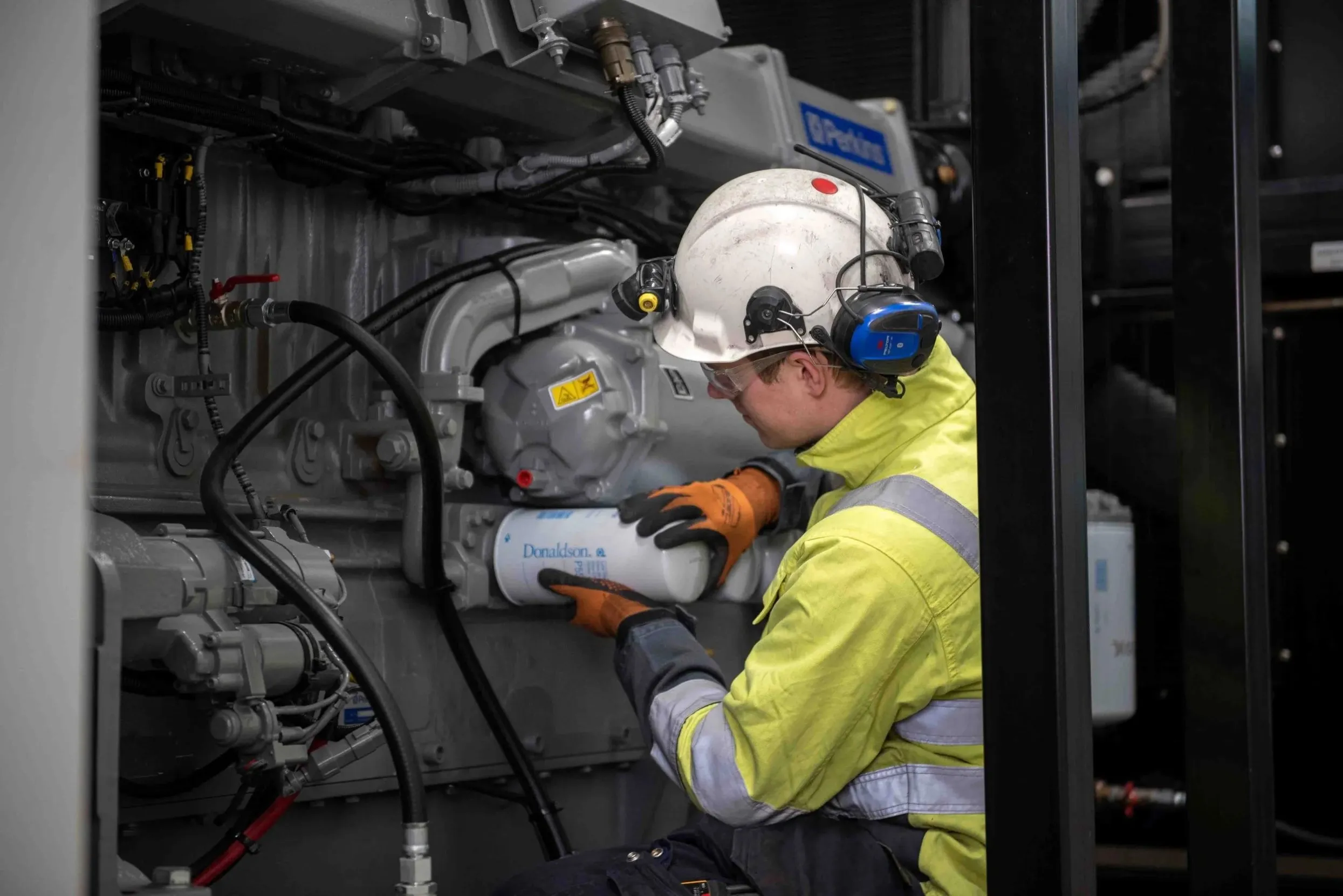
OEM (Original Equipment Manufacturer) filter elements typically adhere to rigorous quality control standards established by engine or equipment manufacturers. Their filtration efficiency, pressure drop, sealing performance, and service life are all engineered for specific applications. For new equipment, vehicles under warranty, or critical operations, OEM filters are often the safest and most straightforward choice.
We also acknowledge that the cost of using inferior filters far outweighs any initial savings. Modern diesel fuel systems operate under high pressure; if a filter fails to effectively trap microscopic particles or moisture, fuel injectors, fuel pumps, and other precision components can sustain damage.
Therefore, the question is not whether OEM filters are of high quality—they certainly are.
The real question is whether they are always the most practical choice when factors such as availability, lead times, operating costs, and equipment downtime are taken into account.
A Real Case from Indonesia
One of our Indonesian customers provides rental and maintenance services for generator sets powered by Cummins QSK60 engines.
At first, we assumed that equipment of this value would always be maintained with genuine parts and filters. A QSK60-powered generator set is a major investment, so using OEM filters seemed like the obvious decision.
But the situation was not that simple.
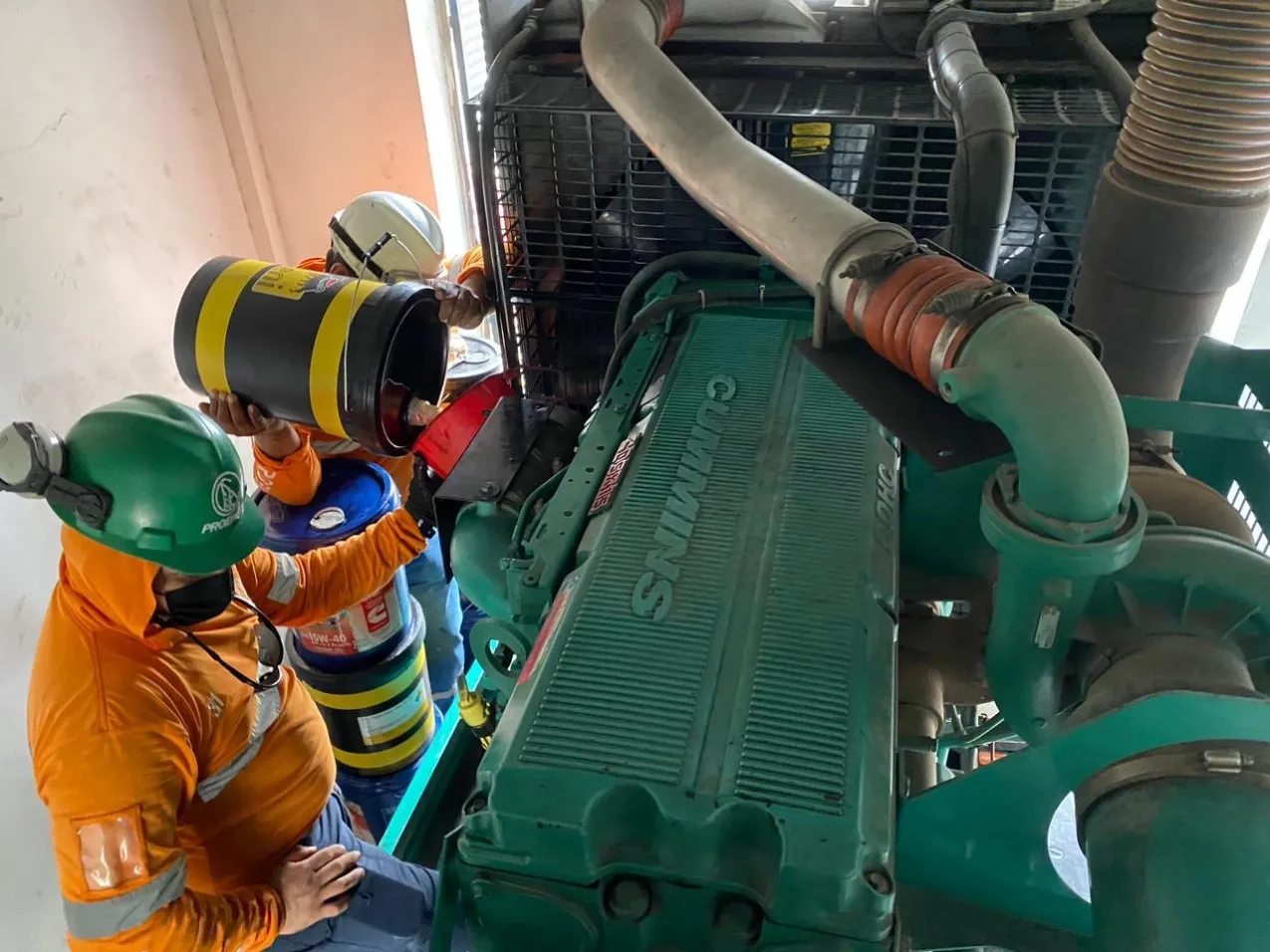
The genuine filter the customer needed was manufactured in the United States and was not available from stock. According to him, purchasing it through an authorized distributor in another country would still require around three to five months.
The price was also extremely high and would have placed considerable pressure on several months of operating expenses.
For a generator rental company, waiting several months for a maintenance part can be more expensive than the part itself. If maintenance cannot be completed, valuable equipment may remain out of service and stop generating rental income.
The customer therefore began looking for a high-quality aftermarket replacement.
It took us three days to confirm the order. During that time, we checked the filter numbers and applications, confirmed availability and worked out a suitable delivery plan.
Chinese New Year was approaching, and many factories and logistics companies were already slowing down. Instead of asking the customer to wait until after the holiday, we contacted different logistics providers and compared the available airfreight routes.
We eventually found a suitable express airfreight solution and dispatched the filters before the holiday began. From order confirmation to final delivery in Indonesia, the entire process took only 12 days.
Compared with the estimated three-to-five-month OEM lead time, the difference was significant. More importantly, the customer could complete the maintenance work and return his equipment to service much sooner.
We later learned that many of the replacement parts used for his generator sets were already high-quality aftermarket products. Price mattered, but availability was equally important.
An OEM filter may offer excellent quality, but if it cannot be delivered for several months, it may not solve the customer’s immediate problem.
Why Is the Aftermarket So Large?
There are millions of trucks, buses, generator sets and construction machines operating long after their original warranties have expired. Many require filter replacement several times a year.
Some equipment has been in service for so long that the original model may already have been discontinued. The machine is still working, but the OEM may no longer produce its filters as regular stock items.
Even when a customer is ready to place an order, the required filter may need to be made specifically for that order. In some cases, the manufacturer must first source the materials and then schedule a new production run. For an older application or a relatively small order, this can be a very long process.
The customer is then left with a practical choice: wait several months for an OEM filter or find a suitable aftermarket replacement that is already available or can be produced more quickly.
This is one reason the aftermarket is so important for older equipment. It helps extend the working life of machines that are still productive, even when their original replacement parts have become difficult to obtain.
For fleet owners, filters are also a regular operating expense. They must consider not only the purchase price, but also inventory, maintenance schedules, delivery time and the cost of downtime.
The African automotive aftermarket was valued at approximately USD 23.2 billion in 2024 and is projected to reach USD 37.6 billion by 2032. The growing number and average age of vehicles are among the main factors behind this demand. 【1】
https://www.gmiresearch.com/report/africa-automotive-aftermarket/
In Latin America, the automotive aftermarket generated an estimated USD 72.2 billion in 2025. Commercial transport, mining, agriculture and construction all create regular demand for replacement parts, including filters. 【2】https://www.grandviewresearch.com/horizon/outlook/automotive-aftermarket-market/latin-america
Demand is also strong in Southeast Asia, where trucks, generators and construction machines often operate in hot, humid or dusty conditions. Fleets may contain American, European, Japanese and Chinese equipment, making it difficult to depend on a separate OEM supply chain for every application.
Most professional buyers are not simply searching for the cheapest product. They want a reasonable balance between quality, availability, delivery time and cost.
Aftermarket Demand Is Also Strong in the United States
Aftermarket demand is not limited to developing markets.
The U.S. light-vehicle aftermarket was projected to reach USD 435 billion in 2025 and exceed USD 500 billion by 2028. 【3】https://www.mema.org/news/us-light-vehicle-automotive-aftermarket-projected-reach-435-billion-2025
Vehicle age is one reason. In 2025, the average age of vehicles operating in the United States reached 12.8 years. Once vehicles are outside their warranty period, owners and repair shops have more freedom to compare different replacement options. 【4】https://www.mobilityglobal.com/en-us/automotive-insights/blog/average-age-of-vehicle-in-us
A 2025 Roland Berger survey also found that 57% of surveyed consumers preferred independent aftermarket parts over original-equipment brands. 【5】https://www.rolandberger.com/en/Insights/Publications/Automotive-Aftermarket-Pulse-2025.html
These figures cover the broader automotive aftermarket rather than filters alone. However, they show that independent replacement parts are a normal part of maintenance, even in mature markets.
Not All Aftermarket Filters Are the Same

Two filters may have the same dimensions and cross-reference number but perform very differently.
Filtration media, efficiency, sealing materials, pressure resistance and bypass-valve settings cannot always be judged by appearance. An aftermarket filter should therefore never be selected only because it looks similar or has a lower price.
The engine and application should be checked first. Where possible, buyers should also review information about filtration efficiency, pressure drop, sealing performance and structural strength.
A cross-reference number can identify a possible replacement, but it is not complete proof of technical equivalence.
Our Approach to Aftermarket Quality
Some customers should continue using OEM filters, especially when equipment is under warranty, the manufacturer requires genuine parts or the application carries unusually high risk.
In other situations, a properly selected aftermarket filter may be more practical. Many professional customers use both, choosing OEM filters for new or critical equipment and high-quality aftermarket filters for regular maintenance on other machines.
Although our main business focuses on the aftermarket, we do not compromise on quality.
We only work with carefully selected manufacturers that have established quality-management and internationally recognized certification systems. Depending on the factory and product line, these may include ISO 9001 or IATF 16949, together with relevant product testing and production-control procedures.
Certificates alone are not enough. We also consider production experience, raw-material control, testing capability, batch consistency and the accuracy of technical information. Product specifications and applications are checked before an order is confirmed.
Our goal is not to offer the lowest-priced filter at any cost. It is to provide a dependable solution with the correct application, consistent quality and a delivery plan that works for the customer.
Aftermarket filters have a market not because customers no longer care about quality. They have a market because customers also care about availability, operating costs and keeping their equipment working.
Sometimes, the best filter is not simply the one with the most familiar name. It is the one that meets the required quality standard—and arrives before equipment downtime becomes a much bigger expense.
If you are looking for a replacement filter for a truck, generator set or construction machine, you can explore our aftermarket filter solutions