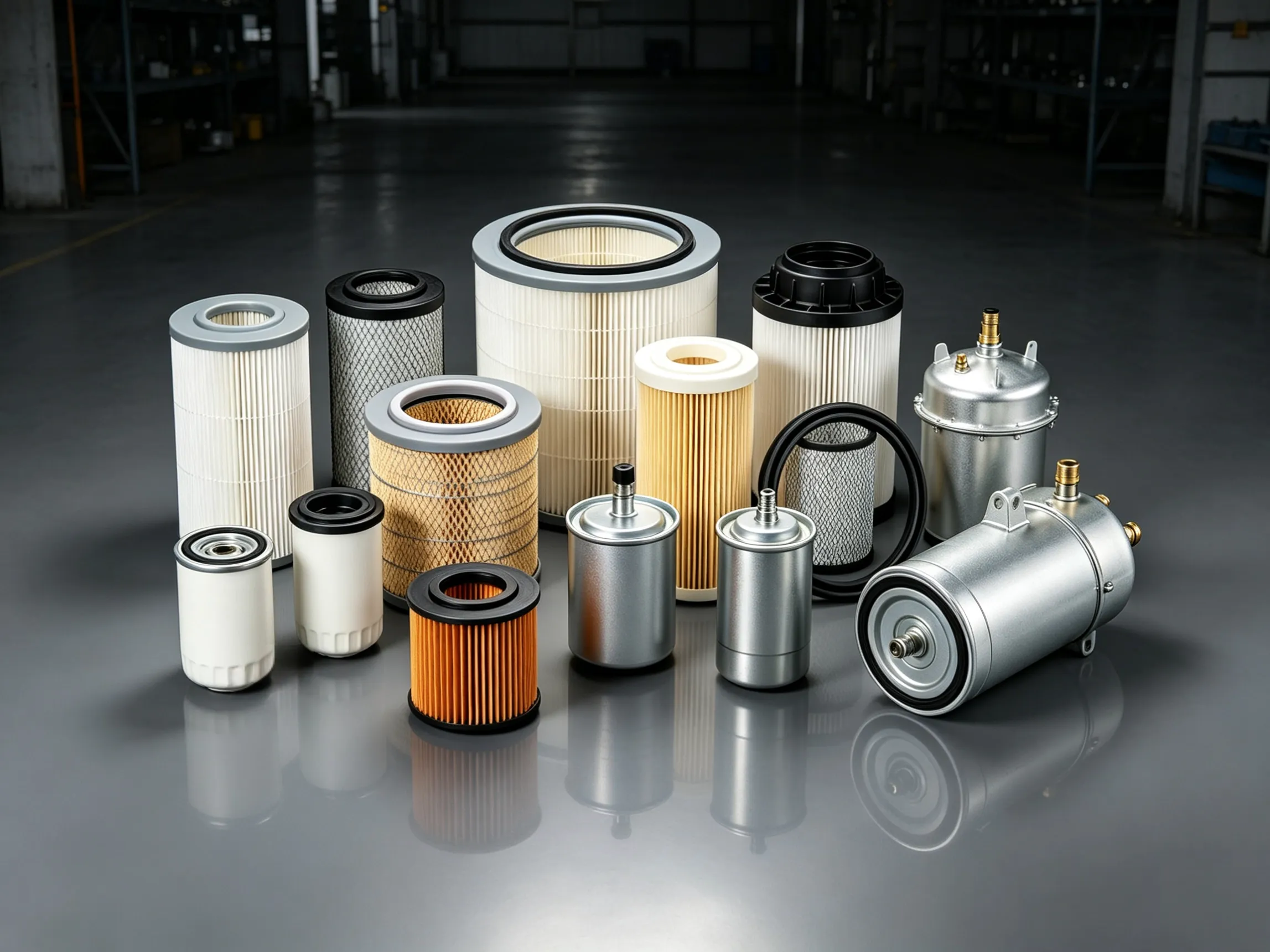
What Suppliers Won’t Tell You: Why Prices for the Same Filter Part Number Can Differ Severalfold
Same filter part number, 5× the price? See how NAKATU compares quality, delivery and warranty before choosing the supplier behind your quote.

Recently, while sourcing filters for a customer, we received quotations for the same requested part number that differed by four to five times. The gap usually comes from filter media grade, component specifications, testing and warranty terms, and the supply channel — not from the part number itself.
For a buyer, that raises an obvious question: why pay more when the part number is the same? For us, it raises several more: What configuration is included? Can the factory deliver when needed? How well do they handle order details? And what support is available if a problem occurs?
These are the questions we work through before preparing our quotation. The price we send is the result of that comparison — and that work is an important part of what customers buy from us.
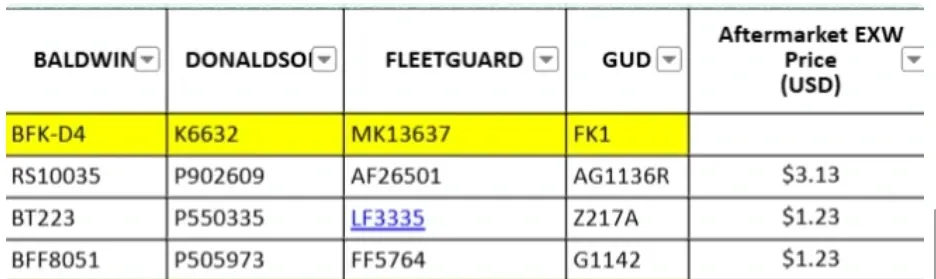
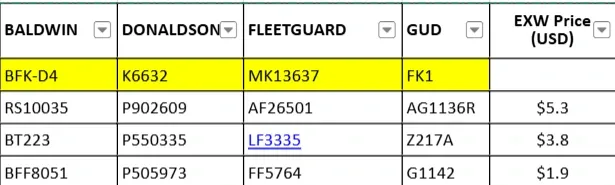
The Same Part Number Does Not Explain the Whole Price
In this inquiry, we confirmed that the suppliers were using different filter paper specifications. That was a meaningful difference behind the quotations, although we did not have a full cost breakdown showing how much of the total price gap it explained.
Filter paper is also only one part of a filter. Depending on the model, differences may include sealing materials, the housing and support structure, end caps, bonding and valve components. Those are possible areas of difference, not findings we confirmed across all the products in this inquiry.
The practical point is simple: a matching reference number does not mean every offer includes an identical product and identical support. Our customers do not need to become filter engineers to place an order — comparing the options and asking those questions is part of our job.
Filter Media: The Biggest Single Difference Behind the Price
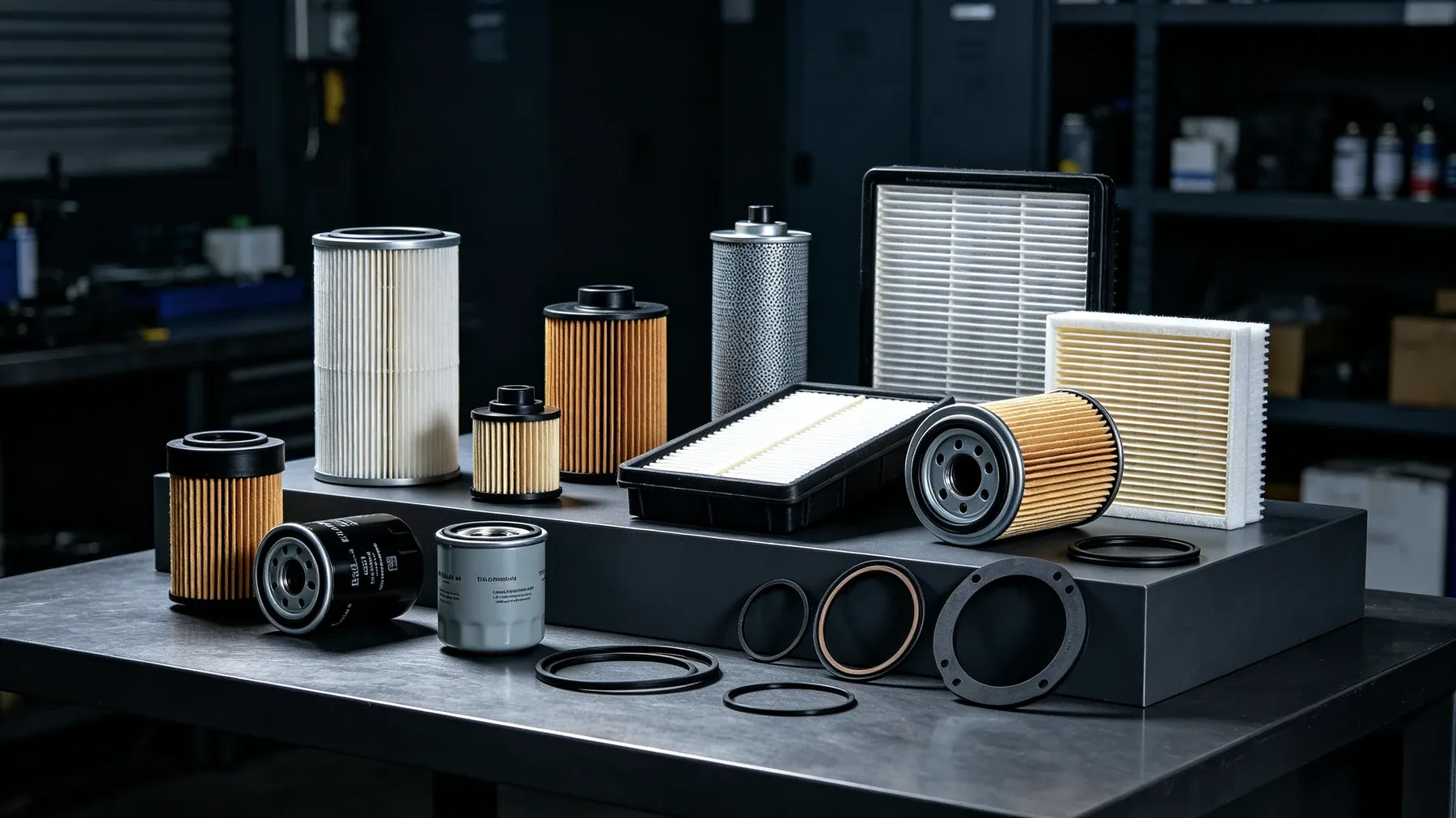
The element's media is usually the largest single cost inside a filter, and it is where offers for the same part number diverge most. Four media types are common in this product range:
Media type | Relative cost | Typical behavior |
Cellulose (paper) | Lowest | Traditional media. Cellulose fibers absorb water, which causes swelling and media breakdown; efficiency and dirt-holding capacity are generally lower |
Cellulose–synthetic blend | Medium | A compromise between cost and performance; common across aftermarket ranges |
Glass fiber (microglass) | Higher | Finer, more uniform fibers; higher capture efficiency at lower flow resistance and better dirt-holding capacity |
Full synthetic | Highest | Smooth, water-resistant fibers with consistent performance; some premium synthetic media lines advertise 2–3× longer filter life than cellulose |
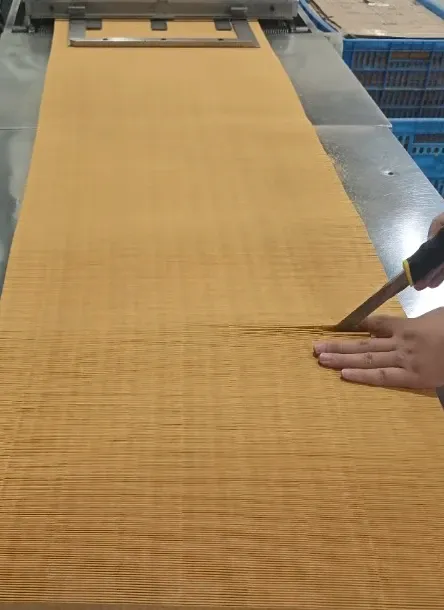
Two practical notes. First, the same micron number can sit on completely different media — a "10 micron" cellulose element and a "10 micron" microglass element are not equivalent offers. Premium synthetic media take this further: trade press on Donaldson's Synteq XP line noted filters lasting 2–3× longer than traditional cellulose.
Second, media grade is exactly the detail a quotation rarely states. Confirming the difference in this inquiry took direct questions to each factory. Our partner factories also cite media sourcing, including imported media, as one stated reason a filter costs more.
Beyond the Media: Other Factors That Move the Price
Media quantity — pleat count, diameter and height determine dirt-holding capacity and service life.
Components — end-cap material, center-tube strength, bonding, bypass valves and seal materials (NBR, FKM, EPDM) vary between price tiers.
Hardware options — drain bowls, water sensors and heated element versions, such as the Fleetguard FS20124, sit in different price tiers.
Testing and documentation — laboratory reports represent real cost, and factories that run their own labs price it in.
Warranty terms — a twelve-month warranty means the factory carries risk for a year; three months prices in less of it.
Batch freshness, order scale and channel — older stock can be cheaper, trial orders carry different economics, and factory, trading-company and distributor offers bundle different services.
We Did Not Choose the Cheapest — or the Most Expensive
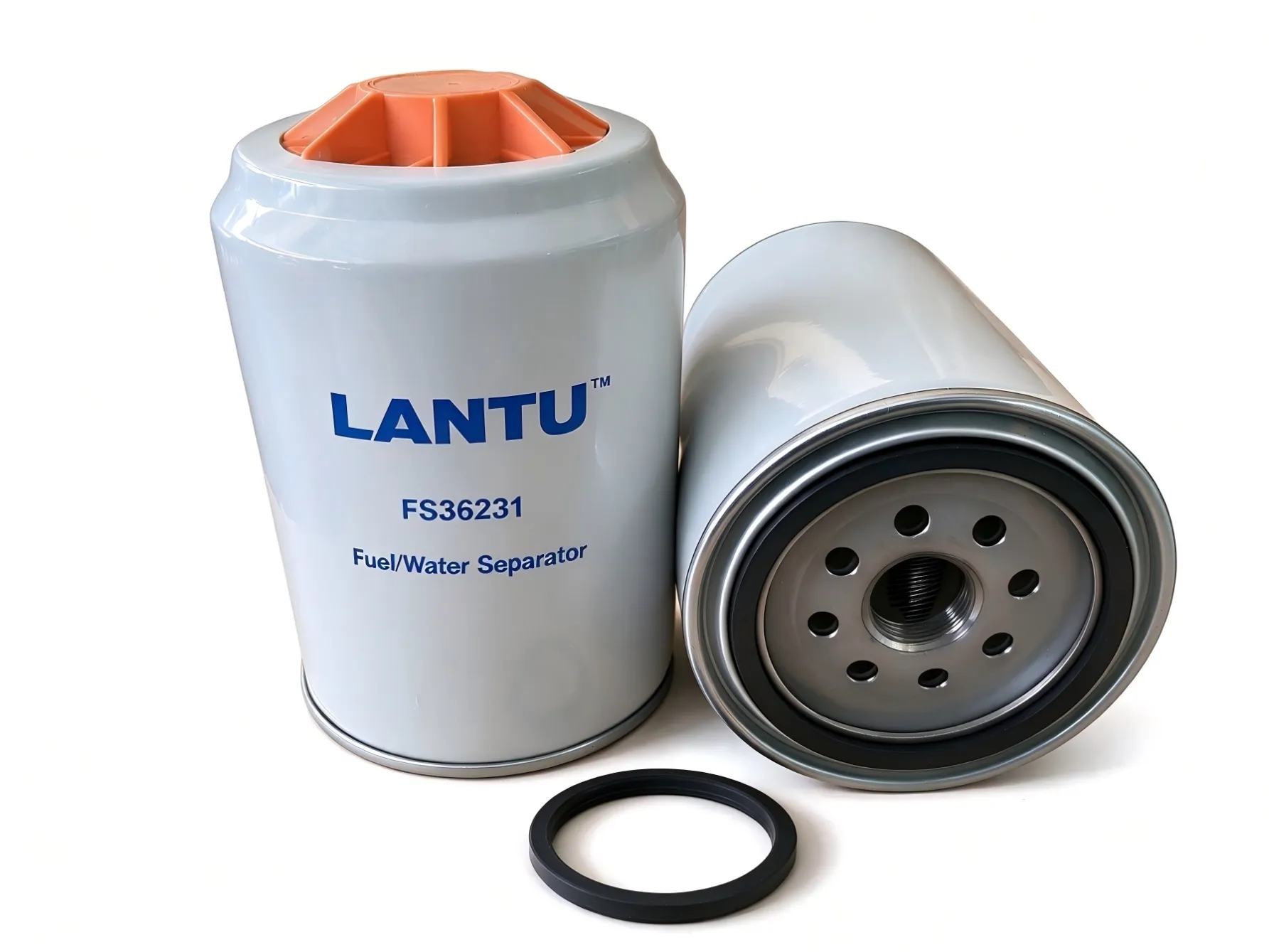
For this inquiry, we selected a supplier priced between the lowest and highest offers. The middle price alone was not the reason: we weighed our working history with the factory, the quality information available, delivery arrangements and after-sales terms.
A factory we have worked with over time gives us a practical basis for assessing how it responds — whether it confirms details clearly, follows up on schedules and helps resolve issues. A low purchase price loses its attraction if repeated chasing or unresolved problems create extra work for the customer. Equally, we see no reason to pick the highest quotation simply because it is the highest.
A Three-Month Warranty Did Not Meet Our Requirement
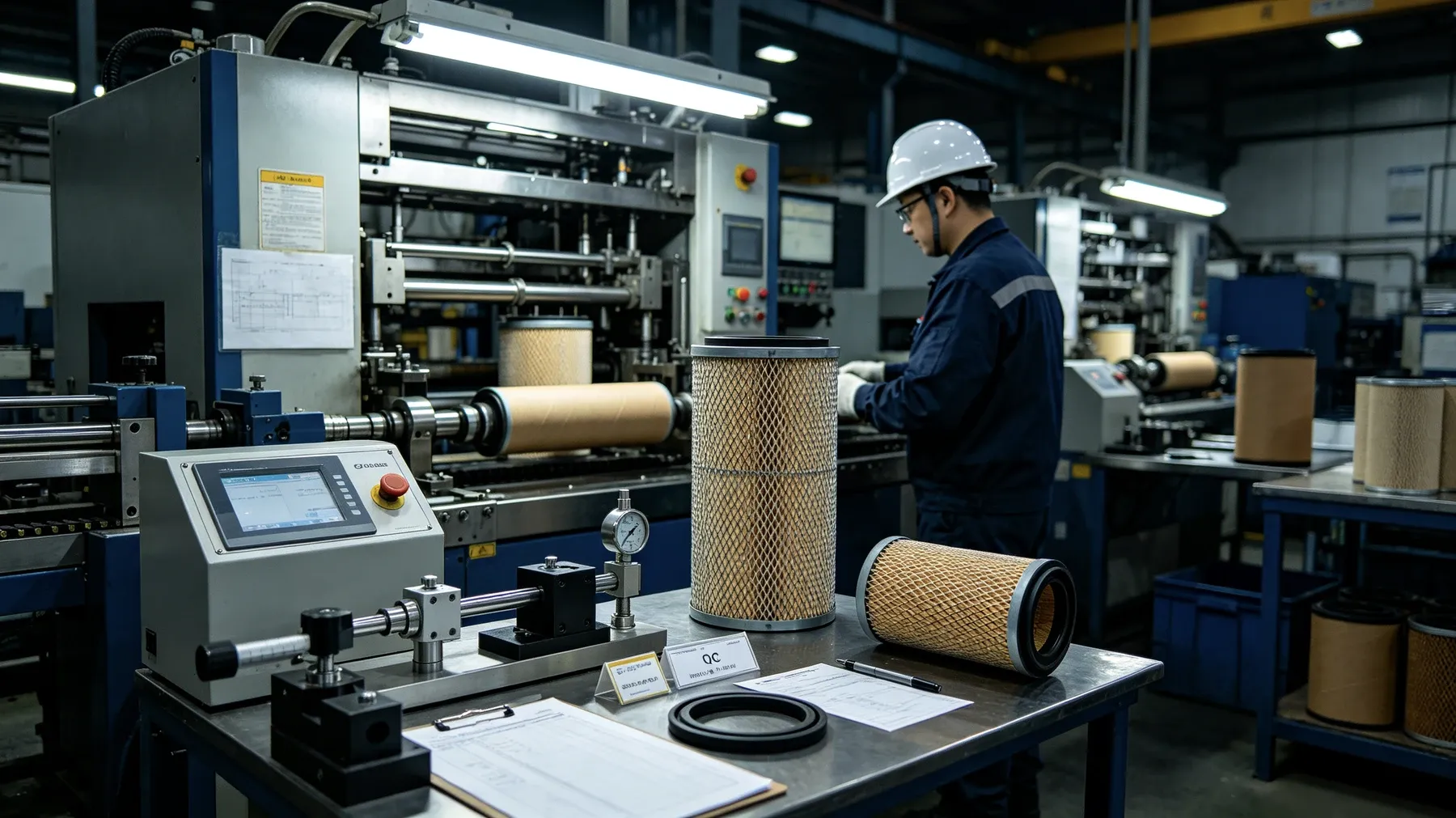
During the comparison, some factories offered only a three-month warranty. That did not meet our requirement for this supply arrangement.
Not every buyer leads with price. One customer in South Africa opened our conversation by asking about our warranty policy before anything else. The reason came out later: they told us a filter from another brand had failed in service and caused equipment damage they estimated in the millions of dollars.
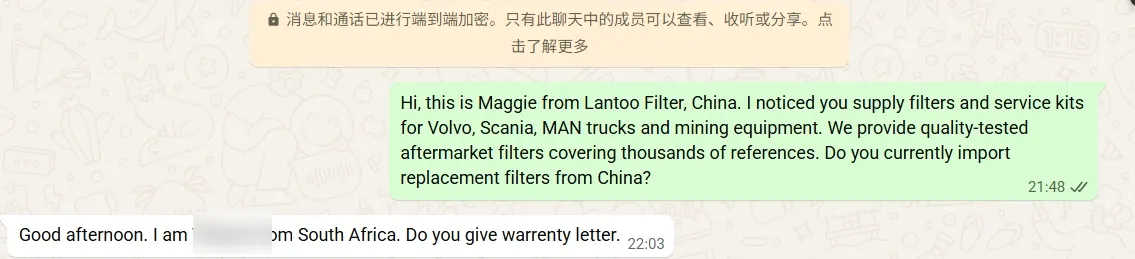
A customer's first question was not about price.
In the years we have been sourcing filters, we have never come across a failure like that ourselves — and we hope none of our customers ever will. But it explains why experienced buyers ask about warranty first, and why price is never the only factor in a quotation.
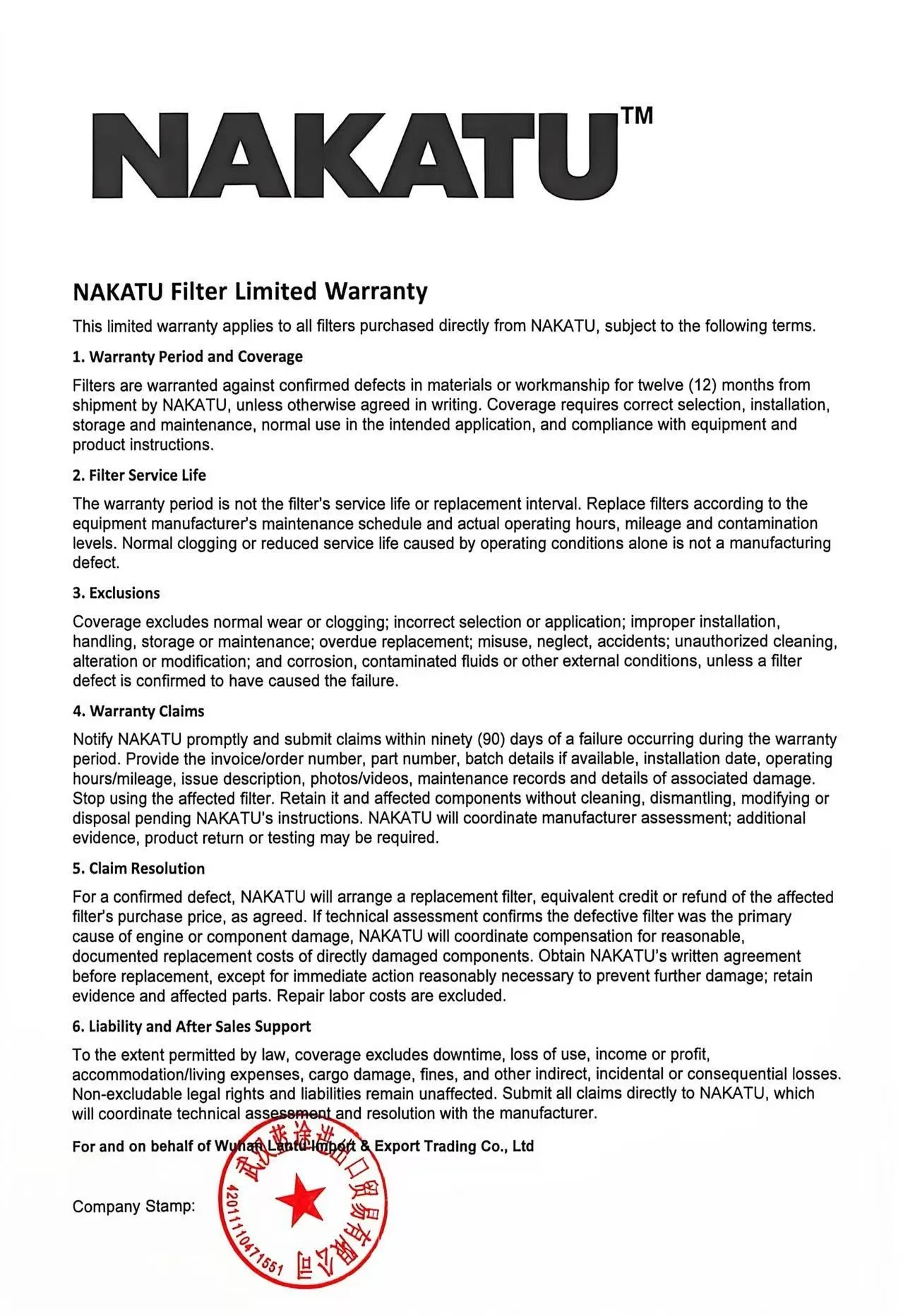
We require the selected manufacturer to provide a one-year warranty against defects in materials and workmanship, with the terms agreed clearly in writing. If a suspected defect is reported, there must be a clear route to submit evidence, review the issue and agree the next step. Our own limited warranty runs for twelve months from shipment and covers confirmed defects in materials or workmanship, subject to our written terms. It does not mean a filter can run for twelve months without replacement — normal clogging, normal wear, incorrect selection or installation, and use beyond the required replacement interval are outside coverage.
What We Compare Before Sending a Price
Our comparison brings several practical factors together:
What we consider | Why it matters to the customer |
Product quality and configuration | The offer needs to match the agreed requirements. |
Delivery and availability | The order needs a workable supply schedule. |
Price and commercial terms | The overall offer needs to make commercial sense. |
Previous cooperation and responsiveness | Details and issues need to be handled throughout the order. |
Warranty and after-sales support | Responsibilities need to be clear after shipment. |
Quality information can include product details, samples, previous supply experience and test documentation where available. A report for one model is useful within its scope; it does not establish the performance of every filter that factory makes. Supplier laboratory reports covering efficiency, dirt-holding capacity, flow resistance and sealing are background information for review — not figures we expect customers to interpret themselves.
When information needs clarification, it remains a question to resolve. We do not turn missing data into a performance claim.
Why Work with a Trading Company?
Customers often come to us with a list of part numbers, quantities and a delivery requirement. Behind that list can be several manufacturers, different material options and very different levels of cooperation.
Our role is to bring those options together: communicating with factories, comparing offers, following up on details and keeping responsibility for the customer relationship. For an order involving several product types, it can mean coordinating different suppliers inside one purchasing process.
This is why our quotation is more than a factory price passed on to the buyer. For a fuller comparison of the two models, see our article on filter factories vs trading companies.
Frequently Asked Questions
Why do quotations for the same filter part number differ so much?
The main drivers are filter media grade and quantity, component specifications such as valves, seals and end caps, testing and documentation, warranty terms, batch freshness, and the supply channel. The part number confirms fit and application — not configuration or quality level.
Is the lowest price ever the right choice?
Sometimes, for non-critical applications with a verified configuration. An unusually low offer deserves a closer look at media, components and after-sales terms before being used for a volume order.
Does a higher price always mean better quality?
No. The highest offer also needs a clear reason behind it. Compare configuration, available test information and after-sales support rather than the price number alone.
A Price We Can Stand Behind
In the inquiry with the four-to-fivefold price gap, the lowest number was not our final answer. Neither was the highest. We selected an option based on price, quality considerations, delivery, cooperation and the warranty requirement — the approach we want our quotations to represent.
Send NAKATU your filter list, quantities and required delivery time. Tell us what matters most to your business, and we will compare the available supply options before preparing our offer.